
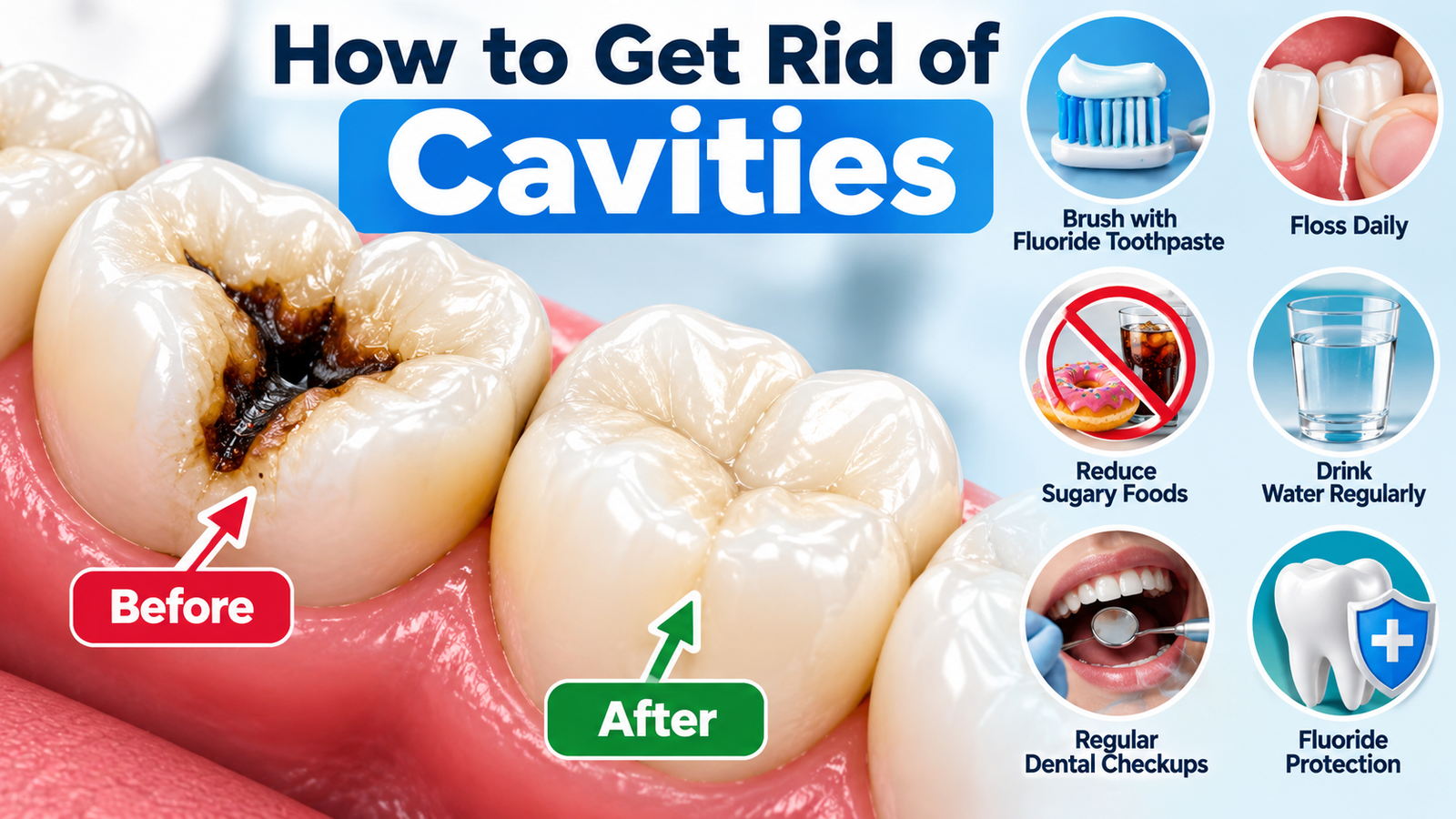
How to Get Rid of Cavities: A cavity does not always need a filling in its earliest stage, but once tooth decay creates a hole, home remedies will not rebuild the missing tooth structure. How to Get Rid of Cavities depends on how far the decay has progressed. Early mineral loss sometimes improves with fluoride and better oral care. A formed cavity often needs a filling or another dental procedure to protect the tooth.
This distinction matters because tooth decay often progresses without obvious pain. Waiting for a toothache before seeking care allows a small problem to become more difficult and expensive to treat. The right approach combines daily prevention, timely dental assessment, and treatment matched to the stage of decay.
What causes cavities, and why do they get worse?
A cavity develops when bacteria in dental plaque use sugars from food and drinks to produce acids. These acids remove minerals from enamel. Saliva and fluoride help replace some lost minerals, but repeated acid attacks shift the balance toward damage.
Frequent sugary snacks, sweetened drinks, poor plaque removal, dry mouth, and inadequate fluoride exposure increase the risk. Cavities also develop in areas where plaque collects easily, including the grooves of molars, between teeth, and around existing fillings.
Tooth decay is a process, not an event. It often begins as mineral loss beneath the enamel surface. If the damage progresses, the surface breaks down and forms a cavity. Deeper decay reaches dentin and, eventually, the pulp containing nerves and blood vessels.
The National Institute of Dental and Craniofacial Research explains how decay develops and why early prevention matters.
Can you get rid of cavities at home?
The answer depends on whether the tooth has lost minerals or has already developed a hole.
Early decay without a hole: The tooth may regain minerals through remineralization. Fluoride toothpaste, regular plaque removal, reduced sugar exposure, and professional monitoring support this process. A dentist might also recommend fluoride varnish or other preventive treatment according to your risk.
A cavity with structural damage: A hole in the tooth does not grow back naturally. Home care helps control further decay, but it does not replace the missing enamel or dentin. A dentist needs to assess whether the tooth requires a filling, a crown, or treatment for deeper infection.
This is the central principle behind How to Get Rid of Cavities safely. Do not assume a dark spot is harmless, and do not assume every early lesion needs drilling. The treatment depends on the lesion’s activity, location, depth, and whether the tooth surface has collapsed.
A cavity also does not need to hurt before it deserves attention. Early decay is often painless. A dental examination, and X-rays when indicated, help identify damage that is difficult to see directly.
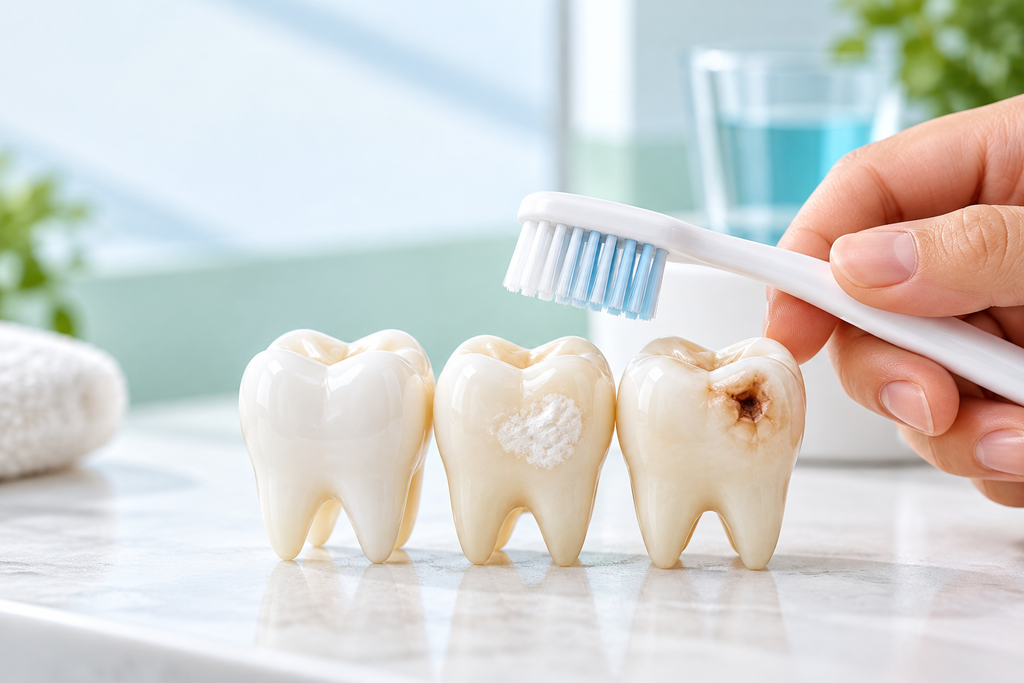
How to stop early tooth decay at home
Home care is most useful when you follow it consistently and use it alongside dental advice when needed.
1. Brush twice daily with fluoride toothpaste
Brush for two minutes in the morning and before bed. Use a fluoride toothpaste appropriate for your age and needs. Fluoride helps strengthen tooth surfaces and supports remineralization of early lesions.
Spit out the toothpaste after brushing rather than rinsing your mouth immediately with water. This leaves more fluoride in contact with the teeth.
Read the American Dental Association’s guidance on home oral care.
2. Clean between your teeth every day
Use dental floss or an appropriately sized interdental brush to remove plaque from areas a toothbrush misses. Choose the method that fits your teeth and that you will use consistently.
Cleaning between teeth is especially important when decay develops along contact areas. Ask your dentist or hygienist to demonstrate the right technique if flossing causes repeated discomfort or bleeding.
3. Reduce how often you consume sugar
The frequency of sugar exposure matters. Repeatedly sipping sweetened drinks or eating sugary snacks throughout the day gives plaque bacteria frequent opportunities to produce acids.
Try to keep sugary foods and drinks to mealtimes rather than consuming them repeatedly between meals. Water is a practical everyday drink. Check labels on sports drinks, sweetened tea, juice drinks, and flavoured beverages because these often contain free sugars.
4. Support saliva production
Saliva helps neutralize acids and supply minerals to the tooth surface. Dry mouth raises the risk of decay, especially around the gum line and roots.
Drink water regularly. Sugar-free gum might help stimulate saliva if chewing is appropriate for you. If your mouth remains dry, ask a clinician whether medicines, medical conditions, or other factors are contributing.
5. Ask whether stronger fluoride protection is appropriate
People with frequent new cavities, dry mouth, exposed root surfaces, or a history of extensive decay might benefit from additional preventive treatment. Depending on the clinical assessment, a dentist might recommend fluoride varnish or prescription-strength fluoride products.
Do not start prescription-strength products without guidance. The appropriate product and instructions depend on age, risk, and individual circumstances.
These habits form the practical foundation of How to Get Rid of Cavities when decay is still at a stage where mineral repair is possible. They also help reduce the risk of new lesions after dental treatment.
How to Get Rid of Cavities: A step-by-step checklist
Use this checklist to support oral health while arranging an examination if you suspect decay.
- Step 1: Brush for two minutes twice daily with fluoride toothpaste.
- Step 2: Clean between teeth daily with floss or an interdental brush.
- Step 3: Reduce frequent exposure to sugary foods and drinks.
- Step 4: Drink water regularly and address persistent dry mouth.
- Step 5: Avoid applying lemon juice, vinegar, aspirin, or concentrated home remedies directly to the tooth.
- Step 6: Book a dental examination for a visible hole, persistent sensitivity, food trapping, or toothache.
- Step 7: Follow the treatment plan and attend recommended reviews to check whether the decay has stopped progressing.
This checklist supports prevention and early management. It does not replace a filling or other treatment when tooth structure has already broken down.
Which dental treatment is right for you?
Dentists choose treatment based on the stage of decay, tooth location, symptoms, structural damage, and the patient’s overall risk.
| Condition | Common treatment approach | Is home care enough? |
|---|---|---|
| Early mineral loss without a hole | Fluoride, plaque control, dietary changes, monitoring | Sometimes, with appropriate assessment |
| Selected lesions suitable for non-restorative care | Professional fluoride treatment, sealants, or silver diamine fluoride in appropriate cases | No. A dentist must select and monitor treatment |
| Small or moderate cavity with structural damage | Filling, often using tooth-coloured composite or another suitable material | No |
| Extensive damage or a weakened tooth | Crown or another restoration, depending on remaining tooth structure | No |
| Decay affecting the pulp | Root canal treatment and restoration, or extraction if the tooth cannot be predictably saved | No |
| Suspected dental abscess | Prompt dental assessment and treatment of the source of infection | No |
Fluoride treatment for early lesions
Fluoride varnish and other professionally selected fluoride treatments help prevent decay and support mineral repair. They are most useful when the lesion is suitable for non-restorative management.
They do not rebuild a large hole in a tooth. Your dentist will assess whether the surface remains intact and whether monitoring is appropriate.
Dental sealants
Sealants cover the deep grooves of selected teeth, particularly molars, to help protect areas where plaque collects. They are mainly preventive and are not a universal treatment for every existing cavity.
Silver diamine fluoride
Silver diamine fluoride (SDF) is a professionally applied liquid used in selected cases to arrest or slow decay. It is useful in some situations where conventional restorative treatment is difficult, but it has an important drawback: treated decayed areas often turn permanently dark or black.
SDF does not restore the original shape of a tooth. It also requires follow-up and is not appropriate for every lesion. The American Dental Association’s SDF guidance discusses its uses, benefits, and limitations.
Fillings
When decay has created a hole, a dentist often removes or manages the damaged tissue as appropriate and restores the tooth with a filling. Composite resin is a common tooth-coloured option. The choice of material depends on the size and location of the defect, bite forces, moisture control, and other clinical factors.
For a suitable cavity, a filling restores the missing contour and helps protect the tooth from further structural damage. This is why How to Get Rid of Cavities often requires professional restoration once a hole has formed.
Crowns and root canal treatment
Extensive decay can leave too little healthy tooth structure to support a simple filling. In such cases, a crown or another suitable restoration might be required.
If decay causes irreversible inflammation or infection inside the pulp, root canal treatment might be needed to preserve the tooth. The tooth then requires an appropriate final restoration. Extraction is considered when the tooth cannot be restored predictably or when other clinical factors make saving it unsuitable.
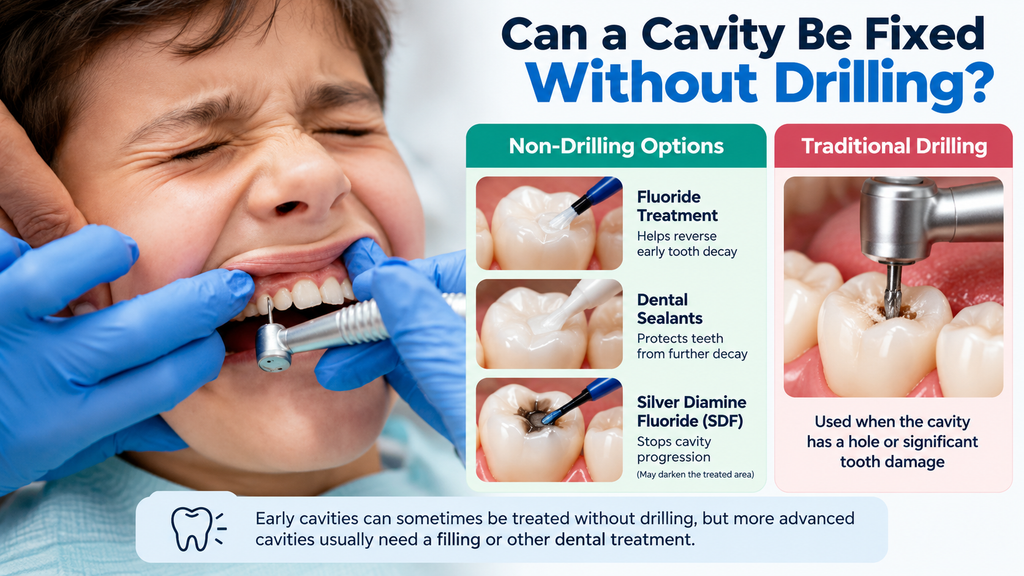
Can a cavity be fixed without drilling?
Sometimes, but only in selected cases.
Early decay without a hole often responds to preventive care and fluoride treatment. Some lesions that have already cavitated are also suitable for professional non-restorative management, depending on their location, activity, cleansability, and the patient’s circumstances.
SDF is one option for arresting selected lesions without conventional drilling. The treated area often becomes black, and repeat applications or monitoring might be needed. It does not rebuild missing tooth structure.
For many cavities with structural breakdown, a restoration remains the appropriate option. A dentist should explain the benefits, limitations, and alternatives before treatment.
Be cautious of claims that a formed cavity will disappear through oil pulling, special diets, supplements, or homemade pastes. These approaches do not reliably replace lost tooth structure.
Home remedies for cavities: what works and what does not?
People often search for How to Get Rid of Cavities without a filling because they want to avoid pain, cost, or dental treatment. It helps to separate measures that support oral health from those that claim to cure decay.
| Remedy | What it does and does not do |
|---|---|
| Fluoride toothpaste | Helps prevent decay and supports remineralization of early lesions |
| Warm salt water | Might offer temporary comfort and gentle cleansing, but does not repair a cavity |
| Clove oil | Evidence for temporary pain relief is limited. It does not remove decay, and concentrated oil can irritate oral tissues |
| Oil pulling | Does not replace fluoride toothpaste, dental assessment, or restorative care |
| Baking soda | Some toothpaste formulations containing baking soda help clean teeth, but baking soda does not rebuild a formed cavity |
| Hydroxyapatite toothpaste | Evidence depends on the formulation and study. Do not assume it will repair every lesion or replace indicated treatment |
| Lemon juice, vinegar, or acidic mixtures | Avoid applying these to teeth because acid exposure can contribute to enamel loss |
| Garlic or other concentrated household substances | They do not cure cavities and might irritate or injure oral tissues |
Salt water might soothe irritated tissues temporarily, but pain relief does not mean the decay has stopped. Avoid placing aspirin directly against a tooth or gum because it can damage soft tissue.
If cost is the main concern, tell the dental clinic. Ask about staged treatment, lower-cost services, public dental facilities, or an interim plan that safely controls the problem while you arrange definitive care.
How to relieve cavity pain at home
Tooth pain needs assessment because several problems can cause similar symptoms. While arranging care, you might:
- Avoid foods and drinks that trigger pain, especially very hot, cold, sweet, or hard items.
- Rinse gently with warm salt water if it feels soothing.
- Use an over-the-counter pain reliever only if it is suitable for your health, other medicines, and age. Follow the label or ask a pharmacist.
- Keep the area clean with gentle brushing.
- Avoid putting aspirin, undiluted clove oil, alcohol, or other irritating substances directly on the tooth.
These measures address discomfort, not the source of decay. Do not delay treatment because the pain temporarily improves.
How do you know if a cavity is getting worse?
Signs of possible decay include white chalky spots, brown or black areas, sensitivity to cold or sweets, food trapping, a visible hole, or pain when chewing. A tooth might also develop spontaneous or lingering pain as the decay approaches the pulp.
Appearance alone cannot confirm the depth of the lesion. Some dark marks are stains or other changes, while decay between teeth might be invisible during a simple visual check.
Arrange a dental appointment promptly if pain persists, sensitivity increases, or you notice a hole or broken tooth. Facial swelling, fever with dental symptoms, or swelling that spreads needs urgent assessment. Difficulty breathing or swallowing, or rapidly spreading swelling, requires emergency care.
How to prevent cavities from returning
Treating one cavity does not remove the risk factors responsible for it. Long-term prevention focuses on controlling plaque, limiting repeated sugar exposure, and maintaining fluoride protection.
- Brush twice daily for two minutes with fluoride toothpaste.
- Spit after brushing instead of rinsing immediately.
- Clean between your teeth every day.
- Keep sugary snacks and drinks less frequent.
- Drink water regularly and address persistent dry mouth.
- Attend checkups at the interval recommended for your risk.
- Ask about sealants, fluoride varnish, or other preventive measures when appropriate.
- Follow any personalized advice about diet, medicines, or oral hygiene.
A dentist might use a caries risk assessment to decide how often you need reviews and whether additional preventive care is justified. People who develop cavities repeatedly often need a tailored prevention plan rather than simply more frequent fillings.
Future dental care is likely to make greater use of digital imaging, risk assessment, and tools that track changes in early lesions. These approaches might help clinicians identify risk sooner and monitor selected areas more consistently. They do not remove the need for a clinical examination or guarantee that every early lesion will reverse.
Frequently Ask Question
Can cavities go away on their own?
A cavity with a hole does not heal itself or regrow missing tooth structure. Early mineral loss without a hole sometimes improves with fluoride, good plaque control, and reduced sugar exposure. A dentist should determine the stage of decay and monitor whether the lesion is stable or progressing.
How do you get rid of cavities naturally?
There is no reliable natural remedy that rebuilds a hole in a tooth. Brushing with fluoride toothpaste, cleaning between teeth, and reducing frequent sugar exposure help prevent decay and support early remineralization. A formed cavity often requires professional treatment.
Can brushing twice a day reverse cavities?
Brushing twice daily with fluoride toothpaste helps prevent decay and supports remineralization of early lesions. It does not restore tooth structure once a hole has formed. Continue brushing, but arrange an examination if you suspect a cavity.
How long does it take to reverse early tooth decay?
There is no fixed timeline. The result depends on the lesion, fluoride exposure, oral hygiene, sugar frequency, saliva, and individual risk. A dentist might monitor an early lesion over time to check whether it is stable or improving.
Can a cavity heal without a filling?
Some early lesions, and selected lesions managed with professional non-restorative methods, do not require a conventional filling. A cavity with significant structural breakdown often does. The right choice depends on clinical findings rather than the appearance of the tooth alone.
Can salt water cure a cavity?
No. Salt water might offer temporary comfort or help rinse the mouth, but it does not remove decay, restore enamel, or fill a hole. Use it only as a supportive measure if comfortable, and seek dental care for suspected decay.
What happens if you ignore a cavity?
Decay might progress into dentin and the pulp, leading to pain, infection, fracture, or loss of the tooth. Treatment often becomes more complex as damage increases. Early assessment usually gives you more options and helps prevent avoidable complications.
When should you see a dentist for a cavity?
Arrange an appointment if you notice a hole, persistent sensitivity, pain while chewing, food trapping, or a suspicious spot. Seek urgent care for facial swelling, fever with dental symptoms, or worsening pain. Difficulty breathing or swallowing requires emergency attention.
Could a cavity go away on its own?
A formed cavity does not disappear on its own because lost tooth structure does not grow back. However, early tooth decay that has not created a hole sometimes reverses through remineralization. Fluoride toothpaste, good oral hygiene, and reduced sugar exposure support this process. A dentist can determine whether the affected area needs monitoring or restorative treatment.
Can I treat a cavity by myself?
You can help slow tooth decay at home by brushing twice daily with fluoride toothpaste, cleaning between your teeth, and limiting sugary snacks and drinks. However, these steps do not repair a hole in a tooth. Arrange a dental examination if you suspect a cavity so the dentist can recommend suitable treatment before the damage progresses.
How can I naturally heal a cavity?
Early enamel damage sometimes improves through remineralization. Brush twice daily with fluoride toothpaste, clean between your teeth, drink water regularly, and reduce frequent sugar intake. Salt water and other home remedies do not rebuild missing tooth structure. Avoid applying lemon juice, vinegar, or concentrated substances to your teeth, as these might damage enamel or irritate oral tissues.
Can you reverse cavities without filling?
Yes, in selected cases. Early decay without a hole sometimes reverses with fluoride and consistent oral care. Dentists also use treatments such as fluoride varnish or silver diamine fluoride for appropriate lesions. Silver diamine fluoride often darkens the treated decayed area. Once a cavity has caused substantial structural damage, a filling or another restoration is usually needed. A dental examination determines the appropriate option.
Final advice: treat the cause, not only the symptom
The safest approach to How to Get Rid of Cavities begins with identifying how far decay has progressed. Early mineral loss sometimes responds to fluoride and changes in daily habits. A formed cavity often requires a filling or another professional procedure, while deeper infection might need root canal treatment or extraction.
Do not rely on pain as your only warning sign. Arrange an examination when you suspect decay, follow a preventive routine, and ask your dentist to explain the available options and costs before treatment.
For more oral health education, visit iDentalFix. Related guides on tooth sensitivity, proper brushing, fluoride toothpaste, and dental treatment costs