
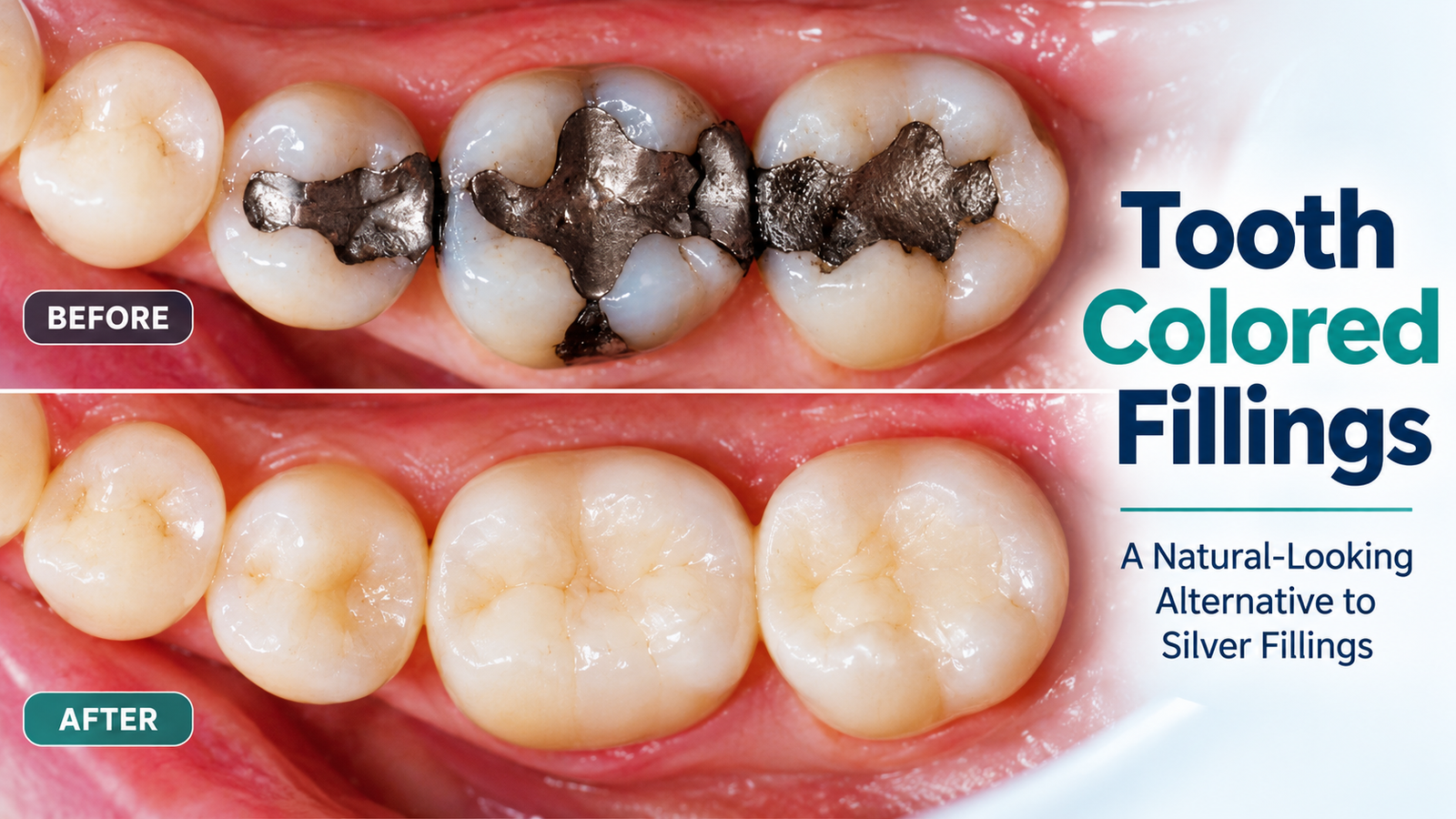
A cavity does not always need a silver-looking filling. tooth colored fillings repair decay and blend with your natural teeth, making them a popular choice for both front and back teeth. Composite resin is the most common option for direct white fillings, while porcelain and other materials suit selected cases.
But appearance is only one part of the decision. You also need to consider cavity size, chewing pressure, durability, cost, and how much healthy tooth remains. This guide explains your options, how dentists place fillings, what they cost, how long they last, and what to do if you suspect a cavity.
What are tooth colored fillings?
These are dental restorations designed to match the shade of natural teeth. Dentists use them to repair tooth decay, small fractures, worn areas, and other forms of limited tooth damage.
The most common material is composite resin, a mixture of resin and fine glass or ceramic filler particles. Your dentist selects a suitable shade, bonds the material to the prepared tooth, shapes it, and hardens it with a curing light.
Other tooth-coloured options include porcelain or ceramic restorations made outside the mouth and bonded or cemented into place. Glass ionomer cement is another material used in selected situations, particularly where fluoride release or specific clinical conditions influence the choice.
The main benefit of tooth colored fillings is their natural appearance. Composite also bonds to tooth structure, often allowing the dentist to preserve more healthy tissue than some traditional preparation designs require.
However, white does not automatically mean stronger or suitable for every cavity. The size and location of the defect, moisture control during placement, bite forces, and your oral health all influence the result.
For a general explanation of filling materials, see the Cleveland Clinic guide to dental fillings.
Which filling material is right for you?
Different materials serve different clinical purposes. Your dentist should explain why a particular option suits your tooth rather than choosing solely by colour or price.
| Material | Appearance | Common use | Main consideration |
|---|---|---|---|
| Composite resin | Matches natural teeth | Small to moderate cavities, front teeth, selected back teeth | Technique-sensitive placement and possible wear or staining |
| Dental amalgam | Silver-grey | Selected back teeth where available and appropriate | Durable, but contains mercury and is less aesthetic |
| Porcelain or ceramic | Closely matches natural teeth | Larger restorations, inlays and onlays | Often costs more and may require laboratory fabrication |
| Glass ionomer | Tooth-coloured, though less translucent | Selected root-surface lesions and specific clinical situations | Generally less wear-resistant than composite in high-load areas |
Composite resin
Composite is often chosen when appearance matters and enough healthy tooth remains to support the restoration. It is placed directly into the prepared cavity, usually in controlled increments or with a suitable bulk-fill technique.
These restorations require careful moisture control and correct curing. Saliva contamination or poor bonding technique affects the quality of the result.
Porcelain and ceramic
Ceramic restorations are considered when a tooth needs more coverage or a larger restoration than a direct filling provides reliably. Depending on the defect, an inlay or onlay might preserve more tooth structure than a full crown.
Amalgam
Amalgam has a long history of use and offers good durability in selected back teeth. It contains mercury, which leads some patients to prefer alternatives. Major dental organisations continue to recognise its clinical usefulness, while environmental concerns and regulations have encouraged reduced use in many regions.
The American Dental Association’s review of restorative materials provides further detail on material properties and safety considerations.
Tooth-colored fillings vs amalgam: what matters most?
The better choice depends on your clinical needs and preferences. Composite offers an aesthetic advantage, while amalgam has a long record of durability in posterior teeth. Evidence from older clinical trials found higher failure rates for composite than amalgam in permanent back teeth, although composite materials have improved since many of those studies were conducted.
| Factor | Composite resin | Amalgam |
|---|---|---|
| Appearance | Blends with tooth shade | Noticeable silver-grey |
| Bonding | Bonds to tooth structure | Retained through cavity design and material properties |
| Tooth preparation | Often preserves more healthy tissue | Preparation requirements differ |
| Durability | Good for many small and moderate restorations | Strong record in selected posterior restorations |
| Cost | Often higher | Often lower where offered |
| Placement | Requires careful moisture control and bonding | Different handling and placement process |
| Mercury | No mercury in conventional composite | Contains mercury |
| Best choice | Depends on cavity size, location, and aesthetic goals | Depends on clinical suitability, availability, and patient factors |
A Cochrane review comparing composite and amalgam found low-certainty evidence that composite restorations in permanent back teeth failed more often in the studies reviewed. Those findings should not be treated as a direct prediction for every modern restoration. Material technology, the cavity, the operator, and the patient’s habits all matter.
For many patients, tooth colored fillings offer a strong balance of appearance and function. For a large cavity under heavy chewing forces, your dentist should discuss whether a direct composite, ceramic onlay, crown, or another material offers the most predictable result.
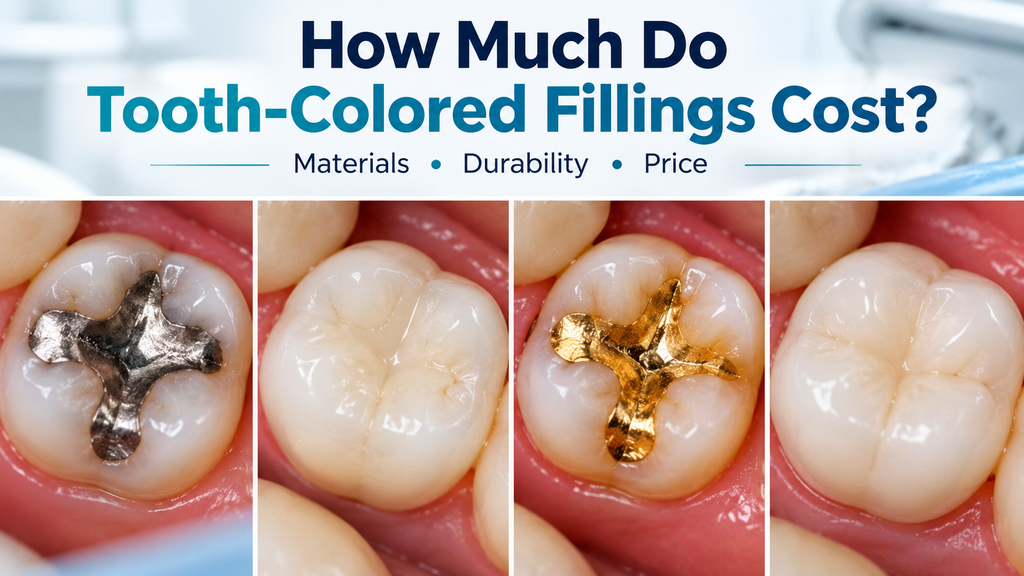
How much do tooth colored fillings cost?
The price depends on the country, city, clinic, material, cavity size, and number of tooth surfaces involved. A small cavity on one surface usually requires less material and time than a large cavity extending between teeth.
In the United States, published patient-facing estimates often place direct composite fillings in the range of roughly US$150 to US$550 per tooth, although local fees vary considerably. Ceramic restorations usually cost more because they require additional laboratory or digital fabrication work. These figures are broad examples, not a quote for your treatment.
In India, fees also vary by city, clinic, restoration size, and whether the treatment requires a direct filling or a laboratory-made restoration. Request a written estimate in your local currency.
Before comparing quotes, ask whether the price includes:
- Examination and any required X-rays.
- Local anaesthesia.
- Removal of decayed tissue and placement of the restoration.
- Bite adjustment and polishing.
- Follow-up if the bite feels high or sensitivity develops.
- Any additional treatment if the cavity is deeper than expected.
The cheapest quote is not necessarily the best value. A filling must seal the cavity, restore the tooth’s shape, and allow comfortable chewing. tooth colored fillings should be compared by their complete treatment plan, not by the headline price alone.
How are tooth colored fillings placed?
A routine direct composite filling often takes around 30 to 60 minutes, depending on the size and position of the cavity. More extensive cases require additional time.
The usual procedure follows these steps:
- Examination and diagnosis: Your dentist checks the tooth and uses X-rays when needed to assess decay that is not visible.
- Local anaesthesia: Numbing medicine is used when appropriate to keep the procedure comfortable.
- Decay removal: The dentist removes the damaged tissue while preserving as much healthy tooth as clinically possible.
- Isolation: The tooth is kept dry. A rubber dam or other isolation method might be used.
- Bonding preparation: The tooth surface is treated according to the bonding system’s instructions.
- Composite placement: The dentist adds the material and hardens it with a curing light.
- Shaping and polishing: The restoration is shaped to fit the tooth and polished for a smooth surface.
- Bite check: You bite down so the dentist can identify and correct any high spots.
A filling should restore both function and contour. If the bite feels uneven after the anaesthetic wears off, contact your dentist for an adjustment rather than trying to correct it yourself.
Are tooth colored fillings safe?
Composite resin is widely used in restorative dentistry. As with any dental material, suitability depends on the individual patient, the product, and correct clinical placement.
Some resin-based materials contain compounds related to bisphenol A (BPA), and trace exposure has been studied. The ADA reports that any BPA exposure associated with dental resin materials is generally low and transient, while advising dentists to follow manufacturers’ instructions and proper curing protocols. Patients with a known allergy to a dental material should tell their dentist before treatment.
Amalgam also has a long clinical history and is regarded by major dental organisations as safe and effective for many patients, although some groups require special consideration and environmental rules influence its use. Discuss your medical history, pregnancy, allergies, and personal concerns with your dentist before deciding.
For further context, review the ADA information on BPA in dental materials and its amalgam guidance.
Are white fillings strong enough for back teeth?
Often, yes. Modern composite materials are suitable for many small and moderate cavities in premolars and molars. The decision becomes more complex when decay affects several surfaces, the tooth has lost a large amount of structure, or heavy grinding places extra force on the restoration.
For extensive damage, an onlay or crown might offer better protection than a direct filling. Your dentist should explain how much healthy tooth remains and whether the restoration is likely to withstand your bite.
Good placement matters. Moisture control, bonding, material selection, and bite adjustment all affect performance. tooth colored fillings are not one single material or one fixed level of strength, so suitability should be assessed tooth by tooth.
Sensitivity after a filling: what is normal?
Mild sensitivity to cold, pressure, or chewing sometimes occurs after a filling. It often settles over days to a couple of weeks, depending on the depth of decay and the tooth’s response.
For temporary discomfort, follow your dentist’s instructions. A desensitising toothpaste might help with sensitivity to cold. Avoid extreme temperatures if they trigger pain.
Contact your dentist if pain worsens, lingers after hot or cold stimuli, wakes you at night, hurts when you bite, or fails to improve. The filling might need a bite adjustment, or the nerve inside the tooth might need further evaluation. Severe spontaneous pain or swelling should not be ignored.
How to care for a new filling
- Brush twice daily with fluoride toothpaste.
- Clean between teeth daily to reduce plaque around the restoration.
- Avoid chewing ice or biting hard objects.
- Wear a dentist-recommended nightguard if you grind your teeth.
- Attend routine checkups so your dentist can inspect the filling margins.
- Limit frequent sugary snacks and drinks.
- Report cracks, rough edges, food trapping, or renewed sensitivity.
A filling does not make a tooth immune to decay. Plaque can still build up at the edges, and the surrounding tooth remains vulnerable to new cavities.
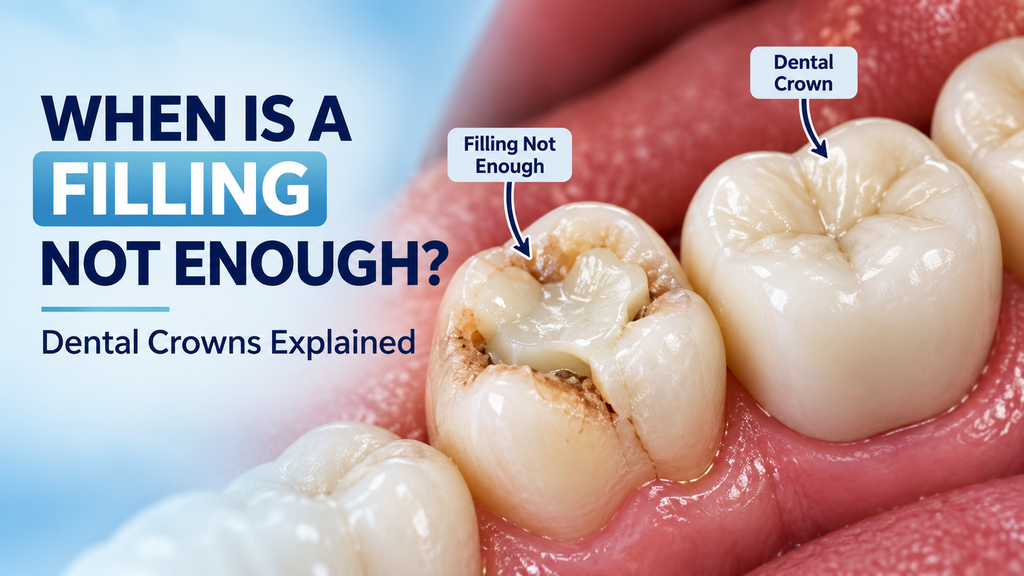
When is a filling not enough?
A direct filling works well when enough healthy tooth structure remains to support it. Larger defects sometimes need a ceramic inlay, onlay, or crown. If decay reaches the pulp and causes irreversible inflammation or infection, root canal treatment might be required before restoring the tooth.
A dentist should also check for cracks, gum disease, and bite problems that affect the long-term outcome. Choosing tooth colored fillings for appearance alone is not wise if a different restoration offers better protection for a badly damaged tooth.
The aim is to preserve the natural tooth whenever feasible while restoring strength, comfort, and function.
Frequently Asked Questions:-
What are tooth colored fillings made of?
Most direct white fillings use composite resin, which contains a resin matrix and fine glass or ceramic filler particles. Other tooth-coloured restorations include porcelain and glass ionomer materials. The best material depends on the cavity’s size, location, moisture control, and chewing forces.
How long do composite fillings last?
There is no guaranteed lifespan. Many last several years, and some last much longer. Longevity depends on the size and location of the restoration, oral hygiene, grinding habits, and placement quality. Regular dental checkups help identify worn edges or recurrent decay before the problem becomes more extensive.
Do fillings hurt?
The procedure is often comfortable, and local anaesthesia is used when needed. Some pressure or vibration is normal during treatment. Mild sensitivity afterward is possible. Severe or worsening pain, prolonged temperature sensitivity, or pain when biting needs a dental review.
Can a white filling be whitened?
Whitening products do not change the shade of composite in the same way they lighten natural enamel. If you plan to whiten your teeth, discuss the timing with your dentist because a visible filling might no longer match your tooth shade afterward.
Can I eat after a filling?
Follow the instructions provided by your dentist. With a light-cured composite filling, eating is often possible once numbness has worn off and your dentist confirms the restoration is ready. Avoid chewing while your mouth remains numb to prevent accidental biting of your cheek or tongue.
What if my filling falls out?
Keep the area clean and arrange a dental appointment promptly. Avoid chewing hard foods on that tooth. Do not use household glue or attempt a permanent repair yourself. Seek urgent care if severe pain, swelling, or signs of spreading infection develop.
Are white fillings covered by insurance?
Coverage varies by country, insurer, plan, and tooth location. Some plans pay different amounts for composite and amalgam restorations, particularly for back teeth. Ask your insurer and clinic for written confirmation of the covered amount and any out-of-pocket fee.
Are tooth colored fillings better than silver fillings?
Neither material is best for every situation. Composite offers a natural appearance and bonds to tooth structure. Amalgam has a long record of durability in selected back teeth. Your dentist should weigh cavity size, location, bite forces, medical history, cost, and your preferences.
Are tooth colored fillings safe?
Yes. Composite resin fillings are widely used and considered safe for most patients when placed correctly by a dental professional. They contain resin and fine glass or ceramic particles. Some resin materials contain compounds related to BPA, but exposure from dental materials is generally low. Tell your dentist about allergies, medical conditions, and any concerns before treatment.
Do tooth colored fillings last longer?
Not necessarily. Composite fillings often last several years, with many remaining functional for a decade or longer under suitable conditions. Amalgam fillings have a long record of durability, particularly in some back-tooth restorations. Longevity depends on cavity size, tooth location, chewing forces, oral hygiene, grinding habits, and placement quality.
What are tooth coloured fillings?
Tooth-coloured fillings are dental restorations designed to blend with your natural teeth. Most direct white fillings use composite resin, a material made from resin and fine glass or ceramic filler particles. Dentists use them to repair cavities, small fractures, and other limited tooth damage while maintaining a natural appearance.
What is the healthiest tooth filling to get?
There is no single healthiest filling material for every patient. Composite resin preserves a natural appearance and bonds to tooth structure. Amalgam is durable in selected cases, while porcelain or ceramic restorations suit certain larger defects. The best choice depends on cavity size, tooth location, bite pressure, allergies, remaining tooth structure, and your budget. Ask your dentist to explain the benefits and limitations of each suitable option.
Final recommendation
A filling is most successful when the material matches the clinical needs of the tooth. Composite offers a natural appearance for many cavities, while ceramic and other materials suit selected cases requiring greater coverage or different mechanical properties.
Before treatment, ask your dentist how deep the decay is, how much healthy tooth remains, which materials suit the tooth, and what the quoted fee includes. Treating decay early often preserves more tooth structure and reduces the chance of needing extensive treatment later.
For more oral-health information, visit iDentalFix.