
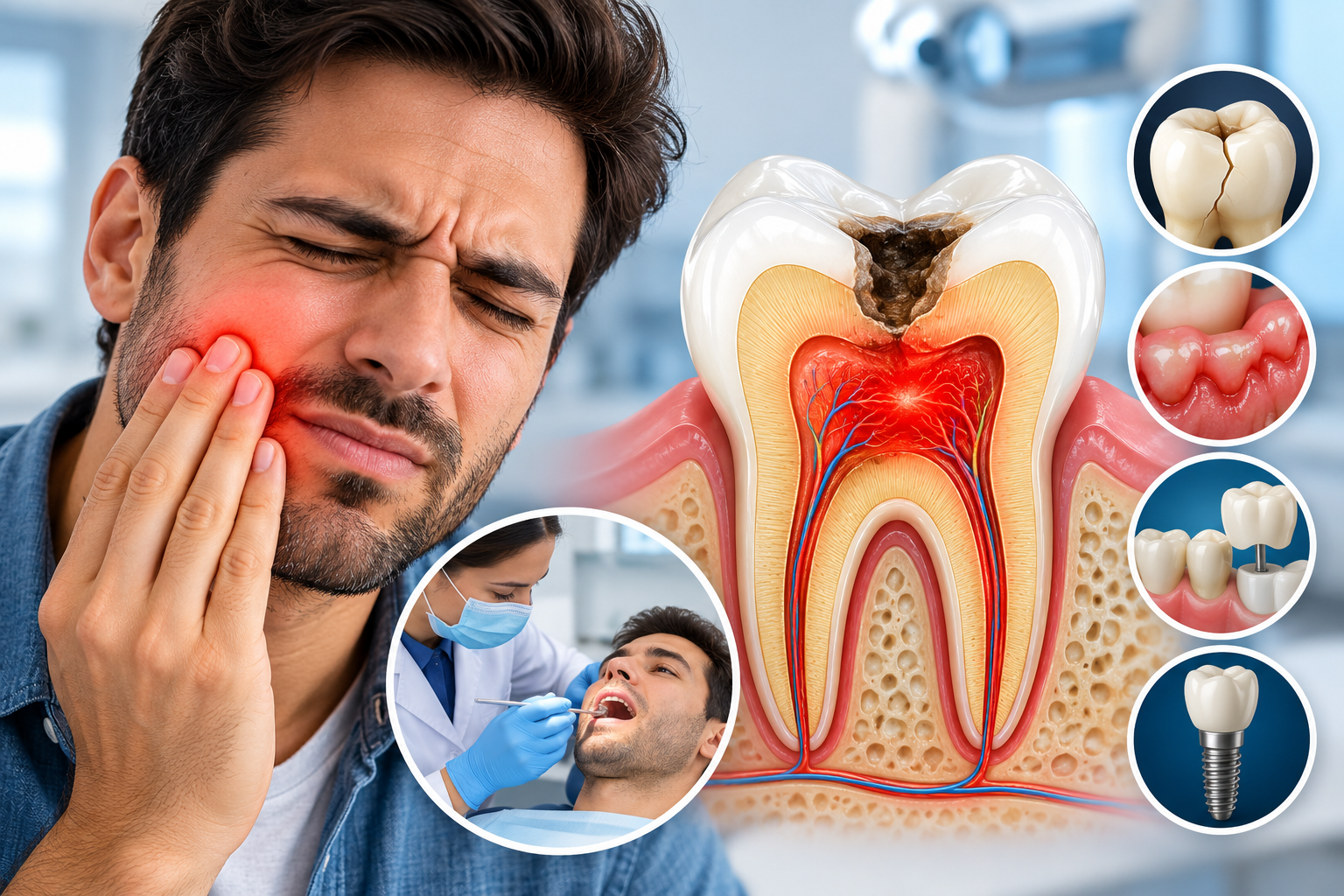
A toothache is easy to dismiss when the pain is mild. Many people reach for a home remedy, take a pain reliever, or wait to see whether the discomfort disappears.
The problem is that tooth pain often has a cause that requires dental treatment.
A temporary irritation around the gums is different from decay that has reached the pulp, an abscess, a cracked tooth, or advanced gum disease. The pain may feel similar at first, but the treatment is not.
Understanding the difference helps you decide when home care is reasonable and when searching for a “dentist near me” should become the next step.
Why Tooth Pain Should Not Be Ignored
Teeth contain nerves and blood vessels inside the pulp. When decay, trauma, cracks, inflammation, or infection reaches deeper structures, the nerve can become irritated.
This explains why tooth pain sometimes feels sharp, throbbing, lingering, or sensitive to hot and cold foods.
Pain also does not always indicate where the original problem started. A dental infection, for example, may produce pain that spreads toward the jaw, ear, or head.
Good Toothache Relief therefore starts with identifying the source rather than trying to suppress the symptom indefinitely.
The Most Common Reasons Your Tooth Hurts
Several dental problems frequently produce tooth pain.
Dental decay
A cavity begins when acids produced by oral bacteria damage the tooth structure. Early decay might produce no symptoms. As the lesion becomes deeper, sensitivity or pain often develops.
A small cavity might require a filling. Deeper decay might involve the pulp and require root canal treatment.
Dental infection or abscess
An abscess develops when bacteria infect the tissues around or inside a tooth.
Possible signs include:
• Persistent or severe tooth pain
• Swelling around the tooth or face
• Pain when biting
• Bad taste or drainage
• Fever
• Tender lymph nodes
A dental abscess requires professional assessment. Pain medication does not remove the underlying infection.
Cracked or fractured tooth
A cracked tooth often produces pain when chewing. Some people notice a sudden sharp sensation when biting down or releasing the bite.
The treatment depends on the location and severity of the fracture. Options range from restoration to root canal treatment and, in severe cases, extraction.
Gum disease
Inflamed gums may bleed during brushing or flossing. Advanced periodontal disease can cause gum tenderness, recession, tooth mobility, and discomfort.
If gum bleeding continues, the problem deserves a dental examination rather than repeated reliance on mouthwash or home remedies.
Tooth grinding and clenching
Bruxism places repeated pressure on teeth and supporting tissues. It may produce jaw soreness, headaches, tooth sensitivity, worn enamel, or pain when chewing.
Night-time grinding often goes unnoticed until a dentist identifies the pattern.
What Toothache Relief at Home Can and Cannot Do
Home measures have a limited role.
A warm saltwater rinse might help clean the mouth and temporarily soothe irritated gum tissue. Rinse gently and spit it out rather than swallowing it.
A cold compress against the outside of the cheek might reduce swelling and discomfort after dental trauma.
Over-the-counter pain medicines such as acetaminophen or ibuprofen often provide temporary symptom control when used according to the product directions and when medically appropriate for you.
These measures do not repair decay, close a fractured tooth, remove an abscess, or reverse periodontal disease.
That distinction matters. Temporary Toothache Relief should never become a reason to postpone necessary dental treatment.
Should You Use Hydrogen Peroxide for Tooth Pain?
Hydrogen peroxide is sometimes promoted online as a home treatment for oral problems.
It should not be swallowed or used as a substitute for dental care. Concentrated or improperly used hydrogen peroxide may irritate oral tissues.
If you are considering a peroxide rinse, discuss the safest approach with your dentist. Routine oral hygiene with brushing, interdental cleaning, and appropriate professional care remains more important.
When Pain Medication Makes Sense
Pain medication addresses symptoms rather than the dental cause.
Ibuprofen reduces inflammation and pain for many adults. Acetaminophen provides another pain-control option. Some people use one medication alone, while others use both under appropriate medical guidance.
Your medical history matters. Kidney disease, liver disease, stomach ulcers, blood-thinning medication, pregnancy, allergies, and other conditions affect which medicines are appropriate.
Do not place aspirin directly against a painful tooth or gum. Direct contact may damage the soft tissue.
Medication can support Toothache Relief while you arrange dental care. It should not replace an examination when pain persists.
When You Should Stop Waiting
A toothache lasting more than a day or two deserves attention, particularly when the pain keeps returning.
Arrange a dental appointment if you develop:
• Persistent tooth pain
• Pain when biting
• Swelling around the tooth or jaw
• Sensitivity that lingers after hot or cold exposure
• A broken or cracked tooth
• Gum swelling or bleeding
• Bad taste or drainage
• A loose permanent tooth
A dentist will examine your teeth and gums and might take dental X-rays when needed.
If you are looking for local dental information or treatment resources, you can also explore iDentalFix.
When Tooth Pain Becomes a Dental Emergency
Some symptoms require urgent attention.
Seek emergency medical or dental care when tooth pain occurs with:
• Significant facial or jaw swelling
• Swelling near the eye
• Difficulty breathing or swallowing
• High fever
• Rapidly spreading swelling
• Severe infection symptoms
• Inability to open the mouth normally
A dental infection has the potential to spread beyond the original area. Fever combined with significant swelling is particularly concerning.
Do not wait for a home remedy to resolve these symptoms.
What a Dentist Might Do for a Toothache
Treatment depends on the diagnosis.
Dental filling
If decay has damaged part of the tooth but the pulp remains healthy, a dentist might remove the decayed tissue and restore the tooth with a filling.
Dental crown
A crown covers a structurally weakened tooth. Dentists often use crowns after extensive decay, fractures, or root canal treatment when sufficient tooth structure remains.
Root canal treatment
When infection or irreversible inflammation affects the pulp, root canal treatment removes the diseased tissue from inside the tooth.
The canals are cleaned, shaped, and sealed. The tooth is then restored to protect it from further damage.
Tooth extraction
Extraction becomes an option when a tooth is too damaged to restore or when other clinical factors make preservation unsuitable.
Replacing a missing tooth might involve an implant, bridge, or removable prosthesis depending on the patient’s circumstances.
Periodontal treatment
When gum disease contributes to pain or inflammation, treatment focuses on controlling bacterial deposits and restoring periodontal health.
How Can You Reduce Your Risk of Another Toothache?
The best toothache strategy is prevention.
Brush twice daily with fluoride toothpaste and use a soft-bristled toothbrush.
Clean between your teeth every day.
Limit frequent exposure to sugary foods and drinks.
Do not use your teeth to open packages or bite hard objects.
Wear appropriate protection during contact sports.
Attend regular dental examinations based on your individual risk.
If you have recurrent sensitivity, bleeding gums, or a history of cavities, discuss preventive options with your dentist.
For patients dealing with persistent gum bleeding, see our internal guide, Why Do Your Gums Bleed When Flossing? Causes, What to Do, and When to See a Dentist.
How to deal with toothache?
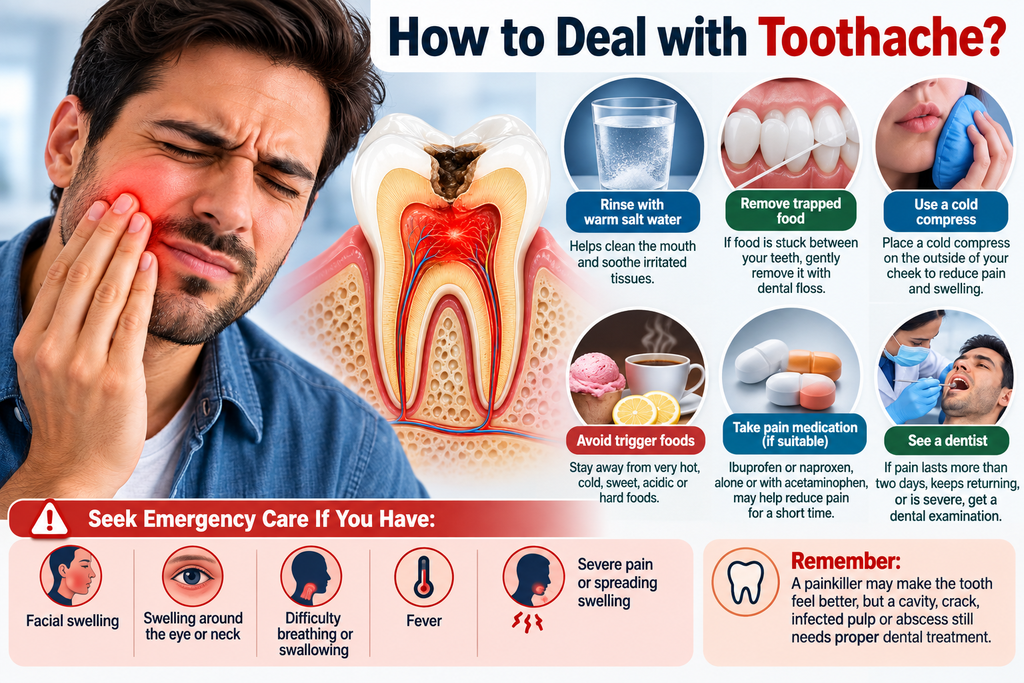
The right way to deal with a toothache depends on what is causing it. A toothache is a symptom, not a diagnosis. A cavity, cracked tooth, gum disease, damaged filling, exposed dentin, inflammation of the dental pulp, or an abscess may all produce pain.
For short-term relief while waiting for a dental appointment, start with simple measures.
Rinse your mouth gently with warm salt water. This helps clean the mouth and may soothe irritated tissues. If food is trapped between your teeth, carefully remove it with dental floss.
A cold compress against the outside of your cheek may help reduce pain and swelling. Avoid placing ice directly against your gums or tooth.
You should also avoid foods that trigger the pain. Very hot, cold, sweet, acidic, or hard foods often make an already sensitive tooth more uncomfortable.
Pain medication is another temporary option for suitable patients. Current American Dental Association guidance supports nonsteroidal anti-inflammatory drugs such as ibuprofen or naproxen, alone or combined with acetaminophen, for acute dental pain in adults and adolescents when definitive dental treatment is not immediately available.
Medication does not repair the tooth.
If the pain continues for more than two days, keeps returning, becomes severe, or occurs with swelling, fever, pain when biting, or a bad taste, arrange a dental examination. The NHS also recommends dental evaluation when toothache persists beyond two days or occurs with these symptoms.
The key distinction is between controlling the symptom and treating the cause. A painkiller might make a tooth feel better, but a cavity, crack, infected pulp, or abscess still requires appropriate dental treatment.
If you have facial swelling, swelling around the eye or neck, or difficulty breathing, swallowing, or speaking, seek emergency medical care. These symptoms require more urgent attention because an oral infection can spread into surrounding tissues.
What is the 3-3-3 rule for toothache?
The “3-3-3 rule” is an internet search phrase rather than an official American Dental Association treatment protocol.
Different websites use the term to describe different approaches to short-term toothache management. Because of this inconsistency, patients should not treat the 3-3-3 rule as a universal medication schedule.
The more useful clinical approach is to look at the type and severity of pain.
If you need temporary pain control, follow the instructions on the medication package and consider your existing medical conditions and other medicines. NSAIDs such as ibuprofen are widely used for acute dental pain, and the ADA’s current guidance supports NSAIDs alone or in combination with acetaminophen for appropriate adults and adolescents.
There are important exceptions.
People with certain stomach, kidney, cardiovascular, bleeding, allergy, pregnancy, or medication-related risks might need to avoid or modify NSAID use. Acetaminophen also has important dose limits and precautions, particularly for people with liver disease or those taking other products containing acetaminophen.
For this reason, a viral dosing formula should not replace professional advice.
The bigger issue is the reason people search for the 3-3-3 rule. They usually want to know how to survive tooth pain until they reach a dentist.
That is where the distinction matters.
Pain medicine is temporary management. It does not remove tooth decay, repair a cracked tooth, restore a broken filling, or eliminate the source of an infected tooth.
If you repeatedly need pain medication because the toothache keeps returning, the underlying dental problem needs examination.
The ADA’s current acute dental pain guideline focuses on evidence-based pain control while definitive dental treatment is unavailable.
What could be causing my tooth pain?
Tooth pain has several possible causes, and the sensation alone does not reliably identify the problem.
A sharp pain when drinking something cold might occur with exposed dentin, tooth decay, enamel wear, gum recession, or a cracked tooth.
Pain when biting down can occur with a cracked tooth, dental decay, inflammation around the tooth, or a damaged restoration such as a filling or crown.
A persistent or throbbing pain may indicate inflammation of the dental pulp or infection.
A tooth that hurts spontaneously, particularly at night, deserves dental evaluation because the pulp inside the tooth might be significantly inflamed.
Gum disease is another possible source of oral discomfort. Inflamed or infected gum tissues may cause tenderness, bleeding, swelling, bad breath, or changes around the teeth.
Other possible causes include:
• Dental cavities
• Cracked or fractured teeth
• Loose or damaged fillings
• Failed crowns or other restorations
• Gum disease
• Teeth grinding or clenching
• Dental trauma
• Dental abscess
• Exposed tooth roots
• Problems involving the dental pulp
Cleveland Clinic notes that toothache symptoms vary according to the underlying problem and include dull, sharp, or throbbing pain, sensitivity, gum swelling, headache, fever, chills, and bad taste or bad breath.
The timing of the pain also gives your dentist useful information.
Pain that lasts only a few seconds after cold exposure differs from pain that continues after the stimulus has disappeared.
Likewise, pain that appears only when chewing differs from spontaneous throbbing pain.
These differences help the dentist decide which teeth require further testing.
A dental examination may include visual inspection, percussion testing, bite testing, pulp testing, gum evaluation, and dental X-rays. The dentist uses these findings together rather than relying on the patient’s description alone.
This is why searching “what could be causing my tooth pain?” is useful for understanding possibilities, but not for making a final diagnosis.
What are some natural remedies for tooth pain?
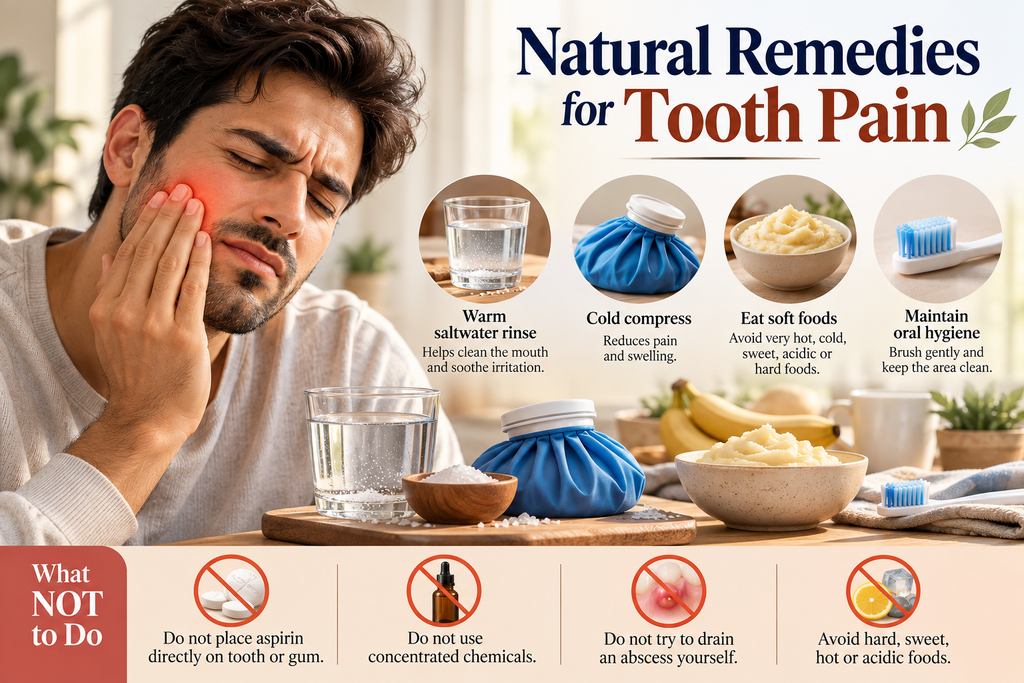
Natural or home remedies are mainly useful for temporary symptom relief.
A warm saltwater rinse is one of the simplest options. It helps rinse away debris and may soothe irritated oral tissues.
A cold compress placed against the outside of the cheek can help with pain and swelling.
Eating soft foods and avoiding the painful side of the mouth also reduces mechanical irritation.
You should continue maintaining oral hygiene, although you should brush gently around a painful area.
What you should not do is equally important.
Do not place aspirin directly against your tooth or gum. Painkillers placed directly against oral tissues may cause chemical irritation or burns. Cleveland Clinic specifically advises against putting aspirin or other painkillers directly against the gums or tooth.
Do not attempt to drain an abscess yourself.
Do not use concentrated chemicals on your gums.
Do not assume that a “natural” substance is automatically safe for damaged oral tissue.
And do not use home remedies as a replacement for dental treatment when pain persists.
A natural remedy might make a tooth feel better without changing the disease inside it.
For example, a saltwater rinse might soothe inflamed gums, but it will not restore a cavity.
A cold compress might reduce swelling, but it will not eliminate the bacteria responsible for an untreated dental infection.
Pain relief should therefore be viewed as temporary support while you determine whether professional treatment is required.
For persistent toothache, the most useful natural step is often arranging a dental examination rather than repeatedly experimenting with home remedies.
When Toothache Should Not Wait
Seek prompt dental care if your toothache lasts more than two days, does not respond adequately to pain medication, or occurs with fever, pain when biting, a bad taste, red gums, or swelling.
Urgent medical attention becomes more important when swelling extends toward the eye or neck or interferes with breathing, swallowing, or speaking.
A dental office can diagnose and treat the underlying problem. Depending on the diagnosis, treatment might involve a filling, crown, root canal treatment, periodontal care, drainage, or extraction.
Antibiotics also require context. The ADA recommends against antibiotics for most pulpal and periapical dental conditions when definitive dental treatment is available. Antibiotics become appropriate in specific situations, particularly when systemic involvement such as fever or malaise occurs.
One thought on “Toothache Relief: What Your Pain Is Secretly Telling You (And How to Stop It Fast)”