
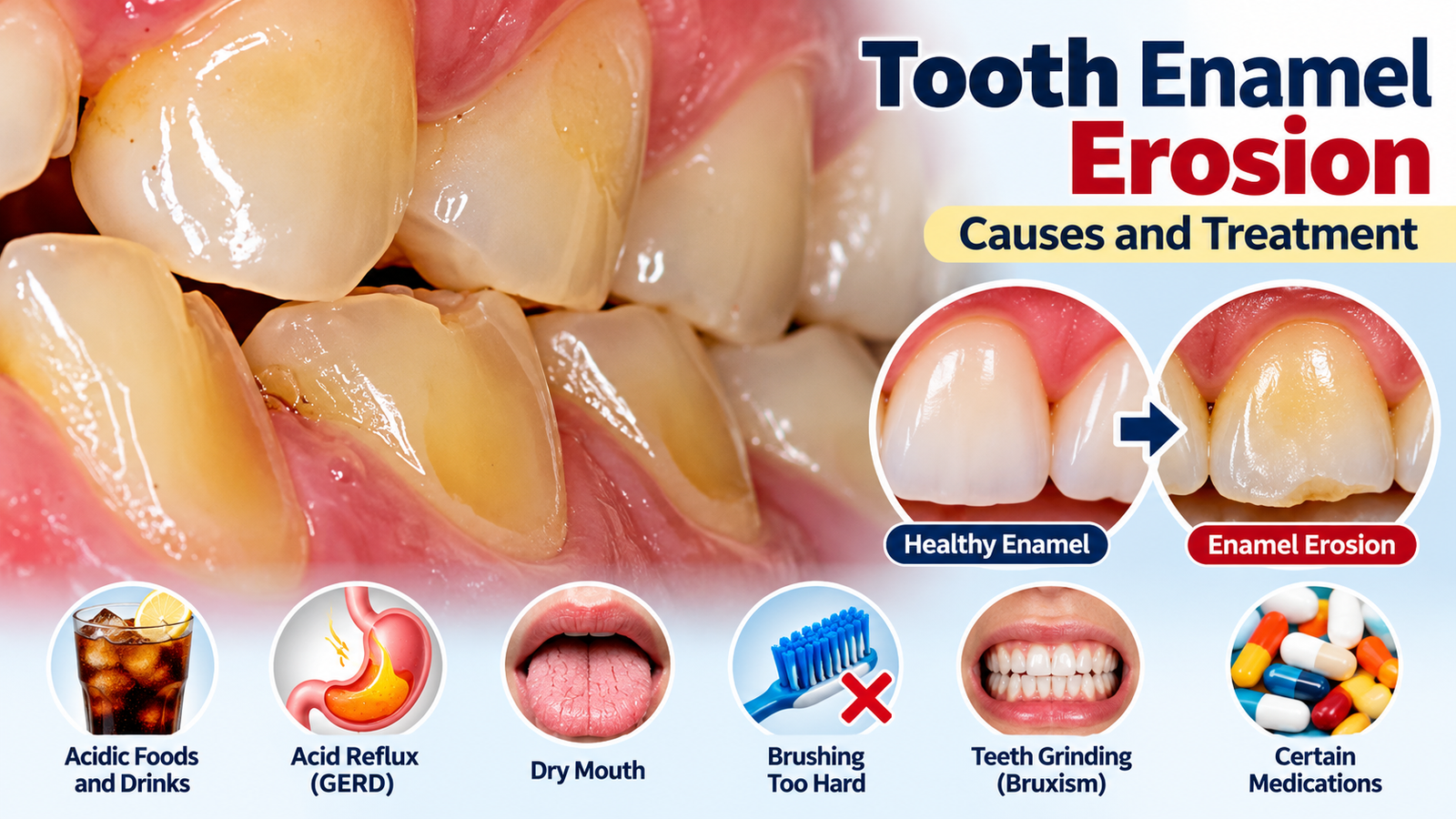
Tooth Enamel Erosion: Your teeth might start looking more yellow, feel sensitive to cold drinks, or develop rough, uneven edges. These changes are easy to dismiss as normal ageing. Sometimes, however, they signal Tooth Enamel erosion, a gradual loss of the hard outer surface protecting each tooth.
The important point is timing. Early action helps limit further damage, but lost enamel does not grow back. Treatment therefore focuses on reducing the cause, protecting the remaining tooth structure, and restoring damaged teeth when needed.
What happens when enamel starts wearing away?
Enamel is the highly mineralized outer layer of a tooth. Acids from food, drinks, or the stomach dissolve minerals from this surface. Dentists call this process dental erosion.
Unlike tooth decay, which involves acids produced by bacteria in dental plaque, erosion results from direct acid exposure. Both conditions sometimes occur together.
As Tooth Enamel becomes thinner, the yellowish dentin underneath becomes more visible. Teeth might develop sensitivity, shallow hollows, transparent edges, or small chips.
The American Dental Association’s guide to dental erosion explains the causes, signs, and management of this condition.
Everyday habits that increase erosion risk
1. Frequent acidic drinks and snacks
Soft drinks, energy drinks, sports drinks, fruit juices, sour sweets, and acidic snacks expose teeth to acids. The frequency of exposure matters. Sipping an acidic drink throughout the day keeps the teeth under repeated acid attack.
You do not necessarily need to remove every acidic food from your diet. Instead, limit how often you consume acidic items, have them with meals, and choose water between meals. Avoid swishing acidic drinks around your mouth.
2. Acid reflux and repeated vomiting
Stomach acid is strong enough to damage teeth when it repeatedly reaches the mouth. Gastroesophageal reflux disease (GERD), recurrent vomiting, and some pregnancy-related conditions increase this risk.
If you experience frequent heartburn, sour fluid in your mouth, or repeated vomiting, speak with a healthcare professional. Treating the underlying medical cause is an important part of preventing further damage.
The ADA’s information on acid reflux and dental erosion explains why medical management and dental monitoring both matter.
3. Dry mouth and medications
Saliva dilutes and neutralizes acids. It also supplies minerals that support the tooth surface. Reduced saliva leaves teeth less protected.
Dry mouth might result from dehydration, certain medications, medical conditions, or treatment affecting the salivary glands. Ask your dentist or physician to review persistent dryness. Do not stop prescribed medication without medical advice.
Water, saliva substitutes, and sugar-free gum might help some people. The ADA’s dry-mouth guidance covers common causes and management options.
4. Brushing too hard and grinding
Aggressive brushing does not cause chemical erosion by itself, but it might worsen wear on a surface softened by acid. Use a soft-bristled toothbrush, gentle pressure, and fluoride toothpaste.
Grinding or clenching places mechanical stress on teeth. Over time, it might flatten chewing surfaces or chip weakened edges. Acid exposure and mechanical wear sometimes occur together, so a dentist should assess the pattern before recommending treatment.
Warning signs you should not ignore
Watch for these changes:
- Sensitivity to cold, hot, sweet, or acidic foods.
- Teeth that look more yellow than before.
- Smooth, glossy areas or shallow hollows on chewing surfaces.
- Front teeth that look thinner or transparent at the edges.
- Small chips, uneven edges, or fillings that seem to stand out.
These signs do not confirm erosion by themselves. Cavities, gum recession, cracks, and grinding might cause similar symptoms. A dental examination helps identify the source and measure the extent of the damage.
Can lost enamel grow back?
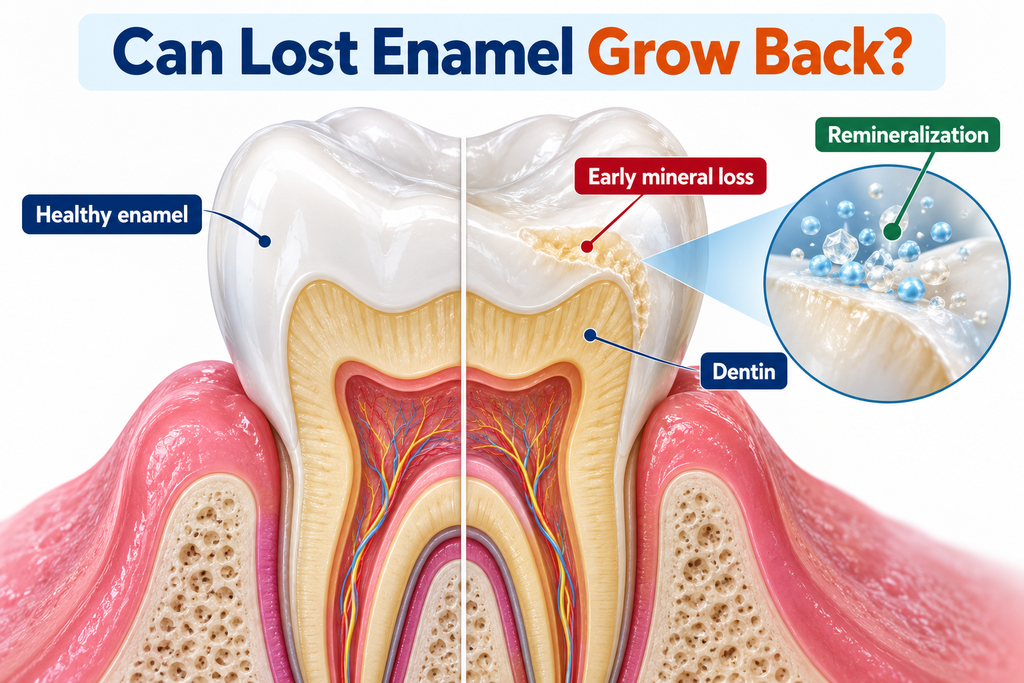
No. Once physical tooth structure has worn away, the body does not regenerate it. However, very early mineral loss might improve through remineralization, supported by saliva and fluoride.
This distinction matters. Fluoride toothpaste and professional fluoride treatments help protect the remaining surface and support remineralization. They do not rebuild a missing piece of a tooth.
The National Institute of Dental and Craniofacial Research explains how saliva and fluoride help replace minerals lost during early tooth decay. Your dentist will determine which preventive measures suit your condition.
Treatment options depend on the damage
Fluoride and sensitivity care
For early erosion or sensitivity, your dentist might recommend fluoride toothpaste, desensitizing toothpaste, or professional fluoride treatment. These measures help protect the remaining surface and reduce discomfort.
Bonding and fillings
Small chips and worn areas sometimes respond well to tooth-coloured composite bonding or fillings. These treatments restore shape and protect exposed areas. The choice depends on the affected tooth, bite forces, and amount of lost structure.
Veneers and crowns
More extensive damage might require veneers or crowns to restore appearance, shape, and function. These treatments differ in how much tooth structure they cover or require.
They are not the first choice for every patient. Your dentist should explain the benefits, limitations, maintenance needs, and alternatives before treatment begins. If acid exposure continues, restored teeth also face a risk of further damage.
A practical routine to prevent further erosion
- Rinse after acid exposure. Swish plain water around your mouth after acidic food, drinks, or vomiting.
- Wait before brushing. Allow saliva time to help the surface recover. A common recommendation is to wait about 30–60 minutes after acid exposure.
- Use fluoride toothpaste. Brush twice daily with a soft-bristled toothbrush and gentle pressure.
- Change your drinking habits. Keep acidic drinks to mealtimes where possible. Do not hold or swish them in your mouth.
- Support saliva flow. Drink water regularly. Sugar-free gum might help if chewing is safe and suitable for you.
- Address reflux or vomiting. Seek medical advice if these symptoms recur.
- Keep dental appointments. Your dentist can document wear over time and identify changes before they become severe.
These habits help protect Tooth Enamel from repeated acid exposure, but they do not replace professional care for established damage or an underlying medical condition.
Why early diagnosis matters
Erosion often progresses slowly. You might not notice it until sensitivity or visible changes appear. A dentist reviews your diet, medical history, brushing habits, and possible grinding. The examination also checks for dry mouth and other factors that increase risk.
This broader assessment is more useful than treating sensitivity alone. For example, a desensitizing toothpaste might reduce discomfort while frequent acidic drinks continue to cause damage. A patient with reflux might need medical treatment alongside dental protection.
Future dental care is likely to place greater emphasis on monitoring tooth wear over time, identifying risk factors early, and choosing minimally invasive restorations. The goal is to preserve natural tooth structure for as long as possible rather than waiting until extensive reconstruction is needed.
Frequently Ask Question :-
Does enamel grow back after erosion?
No. Lost tooth structure does not grow back naturally. Early mineral loss might improve through saliva and fluoride, but worn or chipped areas often require preventive care or dental restoration.
What causes enamel erosion most often?
Frequent exposure to acidic drinks and foods is a common cause. Stomach acid from reflux or recurrent vomiting also contributes. Dry mouth and mechanical wear from brushing or grinding might worsen the overall damage.
How do I stop further erosion?
Reduce how often acidic items reach your teeth, rinse with water after acid exposure, wait before brushing, and use fluoride toothpaste. Address reflux or dry mouth with professional advice. Your dentist can tailor prevention to your individual risk factors.
Does tooth sensitivity always mean erosion?
No. Sensitivity might result from gum recession, cavities, cracks, recent dental treatment, or other conditions. Persistent or worsening sensitivity deserves a dental assessment.
Are veneers the only treatment for severe erosion?
No. Treatment depends on how much tooth structure remains, the location of the damage, your bite, and your goals. Options include bonding, fillings, veneers, and crowns. A dentist should explain which approach preserves the most healthy tooth structure while restoring function.
How can enamel erosion be treated?
Treatment depends on how much enamel has been lost. Early damage is managed with fluoride toothpaste, reduced acid exposure, and changes to brushing habits. A dentist might recommend professional fluoride treatment or desensitizing products for sensitivity. For more advanced damage, composite bonding, fillings, veneers, or crowns help restore tooth shape and protect weakened areas. Treating the underlying cause, such as acid reflux, is essential to prevent further damage.
What are the main causes of tooth enamel erosion?
The main causes include frequent consumption of acidic drinks and foods, such as soft drinks, fruit juices, and sour sweets. Stomach acid from acid reflux or repeated vomiting also contributes. Dry mouth increases risk because saliva helps neutralize acids and protect teeth. Brushing aggressively after acid exposure and grinding teeth might worsen surface wear.
What toothpaste is best for enamel erosion?
Choose a fluoride toothpaste designed to protect enamel and reduce sensitivity. A toothpaste containing stannous fluoride or another established fluoride formulation might help with sensitivity and protection. Use a soft-bristled toothbrush and avoid highly abrasive whitening toothpaste if your teeth are already worn or sensitive. Your dentist should recommend a suitable product based on the extent of erosion and your oral health.
Is enamel erosion permanent?
Yes. Physical enamel loss is permanent because enamel does not grow back. Early mineral loss, however, might improve through remineralization supported by saliva and fluoride. Once enamel has worn away or chipped, dental treatments such as bonding, fillings, veneers, or crowns restore the damaged areas rather than regrow natural enamel. Early diagnosis helps preserve the remaining tooth structure.
Final thoughts
Tooth Enamel erosion is easier to manage when its cause is identified early. Reduce repeated acid exposure, support saliva flow, brush gently with fluoride toothpaste, and seek help for reflux or recurrent vomiting.
If your teeth are becoming sensitive, yellow, translucent, or chipped, arrange a dental examination rather than relying on cosmetic products alone. Tooth Enamel loss is permanent, but timely care helps protect the remaining structure and reduce the need for extensive treatment.
For more oral-health information, visit iDentalFix.