
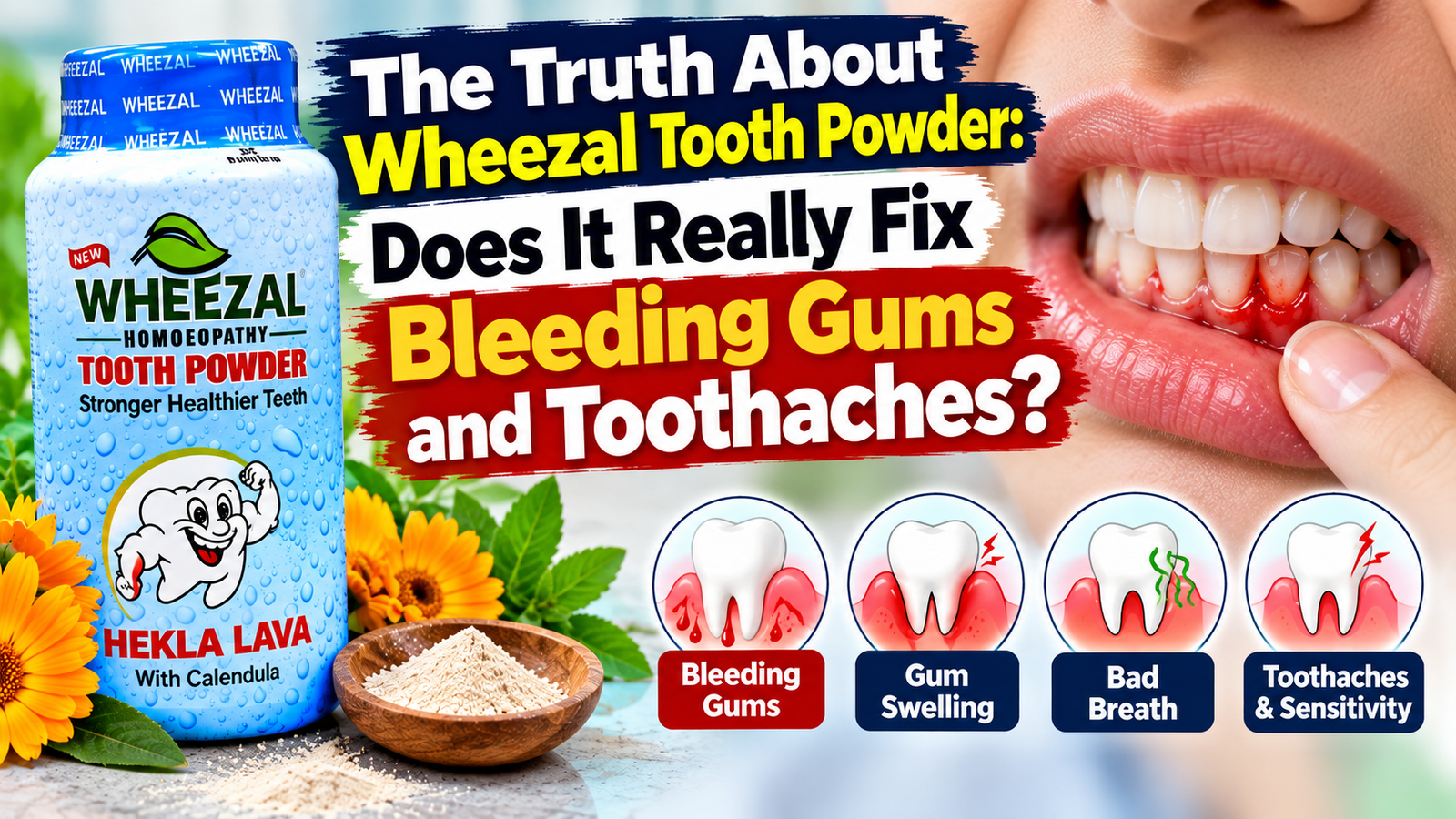
Wheezal Tooth Powder | A tooth powder might look like a simple alternative to toothpaste, but choosing one deserves the same attention you would give any oral-care product.
Wheezal Tooth Powder: Uses, Ingredients, Benefits, Safety and What Dentists Should Know
When people search for “Wheezal tooth powder,” they are often looking for an answer to a more important question: Is this tooth powder suitable for everyday oral care, bleeding gums, toothache, bad breath, or dental problems?
Wheezal Hekla Lava with Calendula Tooth Powder is marketed as a homeopathic dental-care product.
Retail listings describe ingredients including Hekla Lava, Calendula, Plantago, Kreosotum, Calcarea compounds, Mercurius compounds and other ingredients.
Product listings also promote its use for oral hygiene, gum concerns, bad breath, toothache and other dental complaints.
But there is an important distinction between a product being marketed for a dental complaint and having strong clinical evidence for treating the underlying disease.
For anyone searching for a “dentist near me,” understanding this distinction matters.
What Is Wheezal Tooth Powder?
Wheezal Hekla Lava with Calendula Tooth Powder is a powdered oral-care preparation associated with homeopathic dental care.
The product is available in different pack sizes.
Current product listings describe ingredients such as Hekla Lava 3X, Calendula officinalis, Plantago major, Calcarea phosphorica, Calcarea fluorica, Calcarea carbonica and other homeopathic ingredients.
Some listings also identify calcium carbonate and sodium lauryl sulfate among the formulation components.
The manufacturer and retailers position the product for oral hygiene and various dental complaints. The manufacturer’s own store describes use for issues including toothache, bleeding gums and gum shrinkage.
That information tells you what the product is intended for.
It does not establish that the product treats cavities, periodontal disease or dental infection.
Wheezal Tooth Powder Ingredients Explained
The ingredient list deserves more attention than the product name.
Hekla Lava, Calendula, Plantago, Kreosotum and mineral-based homeopathic preparations appear in the listed formulation.
Different retail listings show some differences in the stated composition, so consumers should check the label on their specific pack before relying on an online ingredient list.
This matters because dental products should be assessed according to their actual formulation and intended function.
For example, fluoride has a well-established role in preventing dental caries.
The American Dental Association explains that fluoride strengthens enamel, supports remineralization and helps reduce the risk of tooth decay.
Therefore, when evaluating any tooth powder, the question should not only be “Does it contain natural ingredients?”
A better question is:
“Does its formulation provide the specific preventive benefit I need?”
Does Wheezal Tooth Powder Contain Fluoride?
The publicly listed formulations I found for Wheezal Hekla Lava with Calendula Tooth Powder do not list fluoride as an active ingredient.
This is clinically relevant if your primary goal is cavity prevention.
The American Dental Association recommends brushing twice daily with fluoride toothpaste as part of routine prevention of dental caries.
The ADA also states that toothpastes making an ADA-accepted cavity-protection claim contain fluoride.
So if you are at increased risk of cavities, replacing a fluoride toothpaste with a non-fluoride tooth powder without discussing it with your dentist deserves caution.
Is Wheezal Tooth Powder Good for Bleeding Gums?
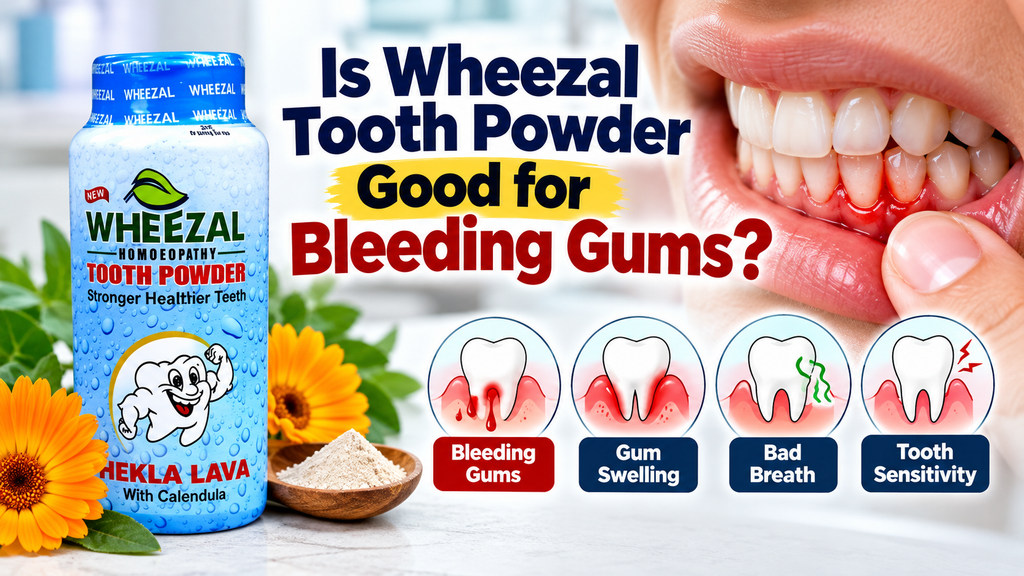
Bleeding gums should not automatically be treated as a simple toothpaste problem.
The most common causes include plaque-induced gingivitis, inadequate interdental cleaning and periodontal disease. Other factors also exist, so persistent bleeding deserves a dental examination.
A tooth powder might form part of someone’s oral-care routine, but it should not replace diagnosis of the cause.
If your gums bleed repeatedly when brushing or flossing, a dentist should assess the gums, plaque levels, calculus deposits, periodontal pockets and other contributing factors.
This is especially important when bleeding occurs together with:
• Persistent bad breath
• Gum swelling
• Gum recession
• Loose teeth
• Pain when chewing
• Pus around the gums
• Increasing tooth sensitivity
Searching for “best toothpaste for bleeding gums” is understandable. But persistent gum bleeding requires more than changing toothpaste.
Can Wheezal Tooth Powder Treat Toothache?
This is where consumers need to be particularly careful.
Retail and manufacturer descriptions associate Wheezal Hekla Lava Tooth Powder with toothache and dental neuralgia.
A toothache, though, is a symptom rather than a diagnosis.
Pain might result from dental caries, pulp inflammation, a cracked tooth, periodontal disease, trauma, exposed dentin, an impacted tooth or an infection.
Changing tooth powder does not remove infected pulp or repair a fractured tooth.
The NHS advises dental assessment when toothache lasts longer than two days, does not settle with painkillers, or occurs with fever, pain on biting, red gums, bad taste or facial swelling.
If swelling affects the eye or neck, or swelling interferes with breathing, swallowing or speaking, emergency medical attention is required.
Can Wheezal Tooth Powder Prevent Cavities?
This requires separating oral cleanliness from caries prevention.
Brushing removes plaque and food debris. But cavity prevention also depends on fluoride exposure, diet, saliva, oral hygiene, previous decay and individual caries risk.
The ADA identifies fluoride toothpaste as an important component of caries prevention.
For patients with elevated caries risk, dentists sometimes recommend additional fluoride measures based on the patient’s age, risk profile and clinical findings.
Therefore, someone with recurrent cavities should not assume that switching to a tooth powder solves the underlying problem.
Is Tooth Powder Better Than Toothpaste?
There is no universal answer.
The physical form of the product matters less than its formulation, evidence, abrasivity, active ingredients and how you use it.
For routine cavity prevention, fluoride remains one of the most important considerations.
The ADA recommends brushing twice daily with fluoride toothpaste for two minutes.
A person with sensitivity, gum disease, high caries risk, orthodontic appliances or exposed root surfaces might need a more specific product.
Your dentist should select oral-care products according to your risk profile rather than according to marketing claims alone.
How Should Wheezal Tooth Powder Be Used?
Product directions vary by formulation and packaging.
The manufacturer’s store instructs users to apply the powder to the teeth and massage gently, with use after meals or according to physician direction. Other listings describe twice-daily use or use according to dental advice. Wheezal Store
Follow the directions on your specific package.
Avoid aggressive brushing or forceful gum massage. Excessive mechanical pressure can contribute to gingival trauma and recession.
A soft-bristled toothbrush and controlled brushing technique are more important than scrubbing harder.
Who Should Think Twice Before Switching to Tooth Powder?
Extra caution makes sense for people with:
• Frequent cavities
• Root caries
• Gum recession
• Periodontitis
• Orthodontic appliances
• Severe tooth sensitivity
• Dry mouth
• Previous extensive dental restorations
• High sugar intake
• Recurrent toothache
• Persistent gum bleeding
These patients often need individualized preventive care.
For example, the ADA’s caries-risk guidance emphasizes fluoride toothpaste, daily interdental cleaning and dietary control as core elements of caries prevention.
What Should You Look for in a Dental Product?
Instead of choosing a product solely because it is labelled herbal, natural or homeopathic, evaluate five things.
- What problem are you trying to prevent?
- Does the product contain an evidence-supported active ingredient for that problem?
- Is there evidence supporting the specific formulation?
- Are you experiencing symptoms requiring professional diagnosis?
- Does your dentist recommend the product for your individual oral condition?
This approach prevents a common mistake: using a consumer oral-care product as a substitute for dental treatment.
Wheezal Tooth Powder and Dental Insurance
Dental products such as tooth powder are usually only one small part of oral-health spending.
If you have recurring dental problems, the bigger financial issue often involves examinations, professional cleaning, fillings, crowns, root canal treatment or periodontal care.
This is where understanding your dental insurance benefits matters.
Before delaying treatment because a home-care product seems cheaper, check whether your dental insurance covers examinations, preventive care or restorative treatment.
Delaying treatment might allow a small problem to become more expensive.
When Should You See a Dentist Instead of Changing Tooth Powder?
Book a dental appointment if you have persistent tooth pain, bleeding gums, loose teeth, facial swelling, recurrent bad breath, sensitivity that is getting worse or visible holes in your teeth.
A dental examination identifies the cause.
A tooth powder only addresses the oral-care routine around the problem.
If toothache continues for more than two days, the NHS recommends seeing a dentist.
The Bottom Line on Wheezal Tooth Powder
Wheezal Hekla Lava with Calendula Tooth Powder is marketed as a homeopathic oral-care product containing ingredients such as Hekla Lava, Calendula, Plantago and several mineral-based homeopathic preparations.
It might appeal to people looking for an alternative tooth-cleaning product.
The clinical question is different.
If your main objective is cavity prevention, fluoride exposure remains an important evidence-based consideration. The ADA recommends twice-daily brushing with fluoride toothpaste for routine caries prevention.
If you have toothache, bleeding gums, swelling or loose teeth, focus first on identifying the underlying dental condition.
A tooth powder should support your oral-care routine. It should not delay treatment of disease.
Frequently Asked Questions
Is Wheezal Tooth Powder safe for daily use?
Follow the instructions on your specific product label. If you experience irritation, worsening sensitivity or other oral symptoms, stop using it and discuss the issue with a dentist.
Is Wheezal Hekla Lava Tooth Powder good for bleeding gums?
The product is marketed for bleeding-gum concerns, but persistent gum bleeding requires evaluation for gingivitis or periodontal disease.
Is Wheezal Tooth Powder good for cavities?
The listed formulation does not show fluoride as an ingredient in the sources reviewed. Fluoride has strong evidence for preventing and controlling dental caries, so people at meaningful cavity risk should discuss their toothpaste choice with a dentist.
Can Wheezal Tooth Powder stop tooth pain?
It should not be relied upon as treatment for unexplained or persistent toothache. Tooth pain requires assessment when it persists or occurs with symptoms such as swelling, fever or pain on biting.