

Tooth Extraction: Losing a tooth is not only a clinical decision. It also raises practical questions about price, pain control, recovery time, insurance, and replacement options. Understanding the likely expense before treatment helps you plan your budget and avoid unexpected charges.
Tooth Extraction costs vary according to the condition of the tooth, the procedure required, the dentist’s expertise, and the clinic’s location. Removing a fully visible tooth is usually simpler than removing a broken root or a wisdom tooth trapped beneath the gum or bone.
The most useful first step is to request an itemised estimate after a dental examination. A low starting price does not always represent the final bill.
What is the estimated cost in India?
The following figures offer a broad guide to private dental fees in India. They are indicative estimates, not a fixed national tariff.
| Procedure | Indicative cost |
|---|---|
| Simple Tooth Extraction | ₹500–₹2,000 |
| Surgical removal of a tooth | ₹1,500–₹5,000 |
| Wisdom tooth removal | ₹1,500–₹6,000 |
| Removal of an impacted wisdom tooth | ₹3,000–₹10,000 or more |
| Removal of a retained root fragment | ₹1,000–₹3,500 |
Published clinic prices vary by city, provider, and case complexity. These ranges reflect publicly reported Indian clinic estimates, not a guarantee of the fee at any particular practice. See an India-focused pricing overview.
A routine Tooth Extraction often costs less because the dentist has direct access to the tooth and does not need to remove bone or divide the tooth into sections. A complex operation requires more time, specialised instruments, and sometimes referral to an oral and maxillofacial surgeon.
Before agreeing to a Tooth Extraction, ask whether the quoted fee includes the consultation, X-rays, local anaesthesia, medicines, follow-up visits, and any required surgical procedure. These items affect the amount you pay out of pocket.
Why do prices differ between patients?
Two people with pain in the same type of tooth might receive different estimates. The clinical findings, not the tooth name alone, determine the treatment plan.
1. The condition and position of the tooth
A loose or fully erupted tooth is often easier to remove than a severely decayed tooth that breaks during treatment. Roots with unusual shapes, teeth close to important nerves, and deeply impacted wisdom teeth require more careful planning.
2. Simple versus surgical treatment
A simple procedure usually involves loosening and removing an accessible tooth under local anaesthesia. Surgical treatment often involves an incision in the gum, and sometimes removal of bone or division of the tooth. The added time and technical demands increase the fee.
3. Diagnostic imaging
A dental examination helps identify the source of pain, but an X-ray often provides essential information about root shape, surrounding bone, infection, and nearby anatomical structures. A cone-beam CT scan is reserved for selected complex cases when three-dimensional information is needed.
4. Dentist or specialist fees
A general dentist handles many routine cases. An oral surgeon is often appropriate for complex impactions, difficult root fragments, or cases involving higher surgical risk. Specialist fees and facility charges differ between clinics.
5. Anaesthesia and additional care
Local anaesthesia is common for routine treatment. Sedation or general anaesthesia, when clinically appropriate, adds expense and requires additional monitoring and facilities.
What should your estimate include?
Ask the clinic for a written breakdown rather than relying on a single headline price.
- Consultation and clinical examination
- Required X-rays or other imaging
- Anaesthesia or sedation fees
- Procedure and surgical charges
- Medicines and post-operative instructions
- Follow-up appointments
- Additional procedures, if indicated
- A separate estimate for tooth replacement, if planned
Not every patient needs every item. A transparent estimate should explain which charges are necessary for your specific case and which are optional.
Costs for children, multiple extractions, and older adults
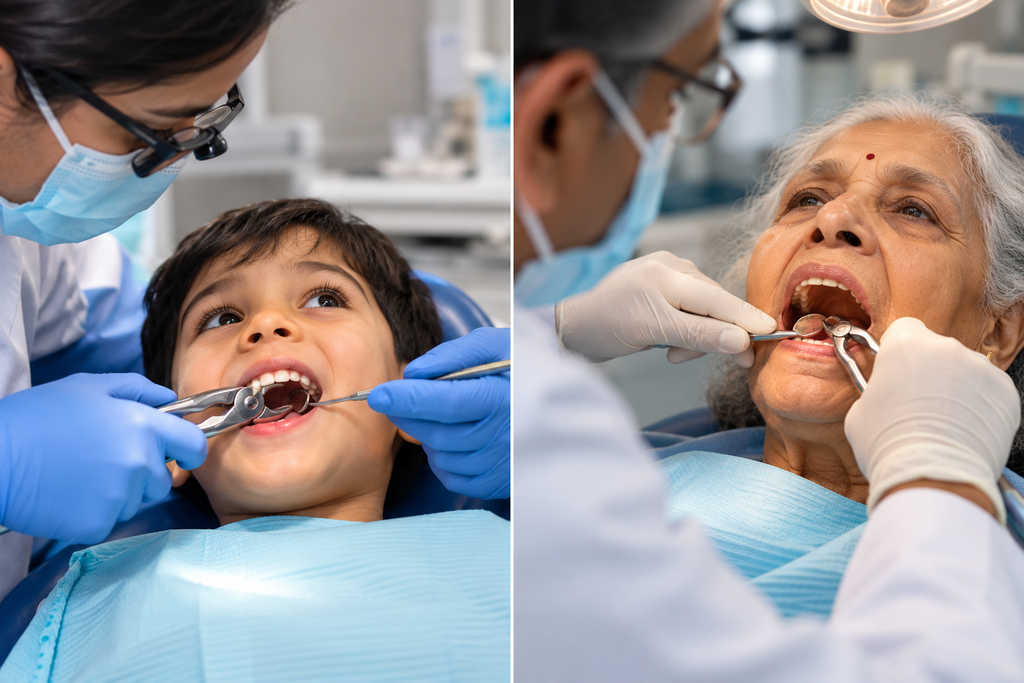
Tooth Extraction for children
A baby tooth that is loose and ready to fall out often needs no professional removal. A dentist should assess a tooth removed early because of decay, trauma, infection, or a problem with the permanent tooth developing underneath. The fee depends on the child’s age, cooperation, tooth condition, and whether additional behaviour support or sedation is required.
Removing several teeth in one visit
Multiple extractions do not always mean paying the full single-tooth fee repeatedly. Some clinics offer a combined estimate, while surgical complexity, separate treatment sites, or sedation still affect the total. Ask how the clinic calculates the fee for each tooth.
Preparing for dentures or implants
For older adults and patients planning dentures, the extraction is only one part of the overall budget. The dentist should explain healing time, temporary denture arrangements, and whether the planned restoration requires additional procedures.
If you are considering an implant, ask whether bone preservation or grafting is appropriate. These treatments are not necessary for every patient, and their costs should be listed separately. Tooth replacement planning is especially important when the extraction site affects future implant placement or denture stability.
Orthodontic extractions
Some orthodontic plans require the removal of selected teeth to create space. The orthodontist and dentist should coordinate the treatment plan and explain whether the extraction fee is separate from the overall orthodontic charges.
Does dental insurance cover the procedure?
Coverage depends on your insurance policy, provider network, waiting periods, annual limits, and the clinical reason for treatment. Some policies cover medically necessary extractions, while others apply exclusions, co-payments, or limits to surgical procedures.
Before booking, ask your insurer:
- Is the proposed procedure covered?
- Is pre-authorisation required?
- Does the policy distinguish simple and surgical removal?
- What deductible, co-payment, or annual limit applies?
- Are consultation, imaging, sedation, and medicines covered?
- Is the dentist within the approved provider network?
Do not assume an emergency procedure is automatically covered. Request written confirmation where possible, and ask the clinic for a treatment code or itemised estimate if the insurer requires one.
Payment options if the bill feels unaffordable
If cost is a concern, tell the clinic before treatment begins. Depending on your location, options might include a government dental hospital, a dental college teaching clinic, a public healthcare programme, an in-network provider, or a clinic offering instalment payments.
Ask whether the clinic provides EMI or financing, and check the interest rate, processing fees, repayment period, and late-payment terms. Compare the total repayment amount rather than the monthly payment alone.
A lower quote is useful only if the provider explains the diagnosis, follows appropriate infection-control procedures, and has the skills and facilities required for your case. Do not delay urgent care solely to compare prices if you have facial swelling, fever, or signs of spreading infection.
What happens after the procedure?
The cost does not end when the tooth is removed. You should receive instructions for protecting the blood clot, controlling discomfort, keeping the mouth clean, and recognising complications.
For the first day, follow the treating dentist’s advice. Avoid vigorous rinsing, smoking, and activities that disturb the extraction site. Choose soft foods while the area is tender, and take prescribed or recommended medicines according to the instructions given to you.
Healing varies with the type of procedure, the number of teeth removed, and your general health. Surgical cases often need more recovery time than straightforward removals.
Contact your dentist if pain or swelling worsens instead of improving, bleeding does not settle with the advised measures, or you develop fever or discharge. Difficulty breathing or swallowing, or rapidly spreading swelling, requires emergency medical attention.
Frequently Ask Questions:-
1. How do I prepare for Tooth Extraction?
Attend the examination, disclose your medical conditions and medicines, and follow the dentist’s instructions about eating, drinking, and anaesthesia. Do not stop prescribed medication unless your treating clinician tells you to. If sedation is planned, ask whether you need an escort home.
2. How long does recovery take after Tooth Extraction?
Initial discomfort often improves over several days, while the gum and underlying bone take longer to heal. Surgical removal, smoking, infection, and individual health factors influence recovery. Follow the clinic’s aftercare instructions and arrange a review if symptoms worsen.
3. What is the reason for a high Tooth Extraction cost?
The fee often rises when the tooth is impacted, broken below the gumline, close to important anatomical structures, or requires bone removal or tooth sectioning. Specialist care, advanced imaging, sedation, and facility charges also affect the final estimate.
4. What foods help healing after Tooth Extraction?
Choose soft, nutritious foods such as yoghurt, mashed vegetables, scrambled eggs, soft rice, and lukewarm soups. Avoid very hot foods, hard or sharp pieces, and anything likely to disturb the extraction site. Follow your dentist’s advice about when to return to your usual diet.
5. How painful is teeth extraction?
The procedure itself is usually not painful because the dentist numbs the area with local anaesthesia. You might feel pressure or movement while the tooth is being removed. After the anaesthesia wears off, soreness, tenderness, and swelling are common. These symptoms usually improve over several days. Surgical removal often causes more discomfort than a straightforward procedure. Contact your dentist if pain becomes severe or worsens after initially improving.
6. What can I eat after tooth extraction?
Choose soft foods that require little chewing, especially during the first 24 hours. Suitable options include yoghurt, mashed potatoes, scrambled eggs, soft rice, and lukewarm soup. Avoid hot foods, crunchy snacks, nuts, seeds, and hard foods near the extraction site. Do not use a straw during the initial healing period, since suction might disturb the blood clot. Follow your dentist’s instructions and return to your normal diet gradually as comfort improves.
7. How long does tooth extraction take?
A simple extraction often takes around 20 to 40 minutes, including preparation and local anaesthesia. A complex or impacted wisdom tooth procedure often takes longer, sometimes 45 minutes to an hour or more. The actual removal time depends on the tooth’s position, root shape, and surrounding bone. Your appointment might also include an examination, X-rays, consent, and post-operative instructions.
8. What are the risks of pulling a tooth?
Possible complications include bleeding, infection, swelling, bruising, dry socket, and delayed healing. Some lower wisdom tooth procedures carry a risk of nerve injury, while upper back teeth sometimes lie close to the maxillary sinus. The likelihood of complications depends on the tooth, your medical history, and the complexity of the procedure. Follow your dentist’s aftercare instructions and seek prompt advice for persistent bleeding, worsening pain, fever, or increasing swelling. Difficulty breathing or swallowing requires emergency medical care.
A practical checklist before booking
Use this checklist when comparing clinics.
- I understand why the tooth needs removal and whether a restorative option is reasonable.
- I have received an itemised estimate.
- I know whether imaging, anaesthesia, medicines, and follow-up are included.
- I have checked my insurance benefits or payment options.
- I understand the aftercare plan and warning signs.
- If replacement is planned, I have discussed its separate cost and timing.
How dental planning is changing
Digital radiography, three-dimensional imaging, and computer-assisted planning support more detailed assessment in selected complex cases. Future clinical workflows are likely to integrate imaging, patient history, and structured treatment data more closely, helping clinicians explain risks and compare options.
These tools support clinical judgement rather than replace it. The decision to remove a tooth still depends on the diagnosis, the chance of saving it, the patient’s preferences, and the risks and benefits of each available treatment.
Related resources
For general dental information and further patient guidance, visit iDentalFix.
For external guidance on public dental charges in England, consult the NHS dental treatment cost guide. Its fee structure applies to England’s NHS system and should not be used as an estimate for private treatment in India.
Final takeaway
Tooth Extraction pricing depends on the clinical work involved, not simply the act of removing a tooth.
Ask for a written estimate, confirm what the fee includes, check insurance or financing terms, and discuss whether the tooth is suitable for restoration before making a final decision.
A clear treatment plan helps you budget for both the procedure and the recovery that follows.