
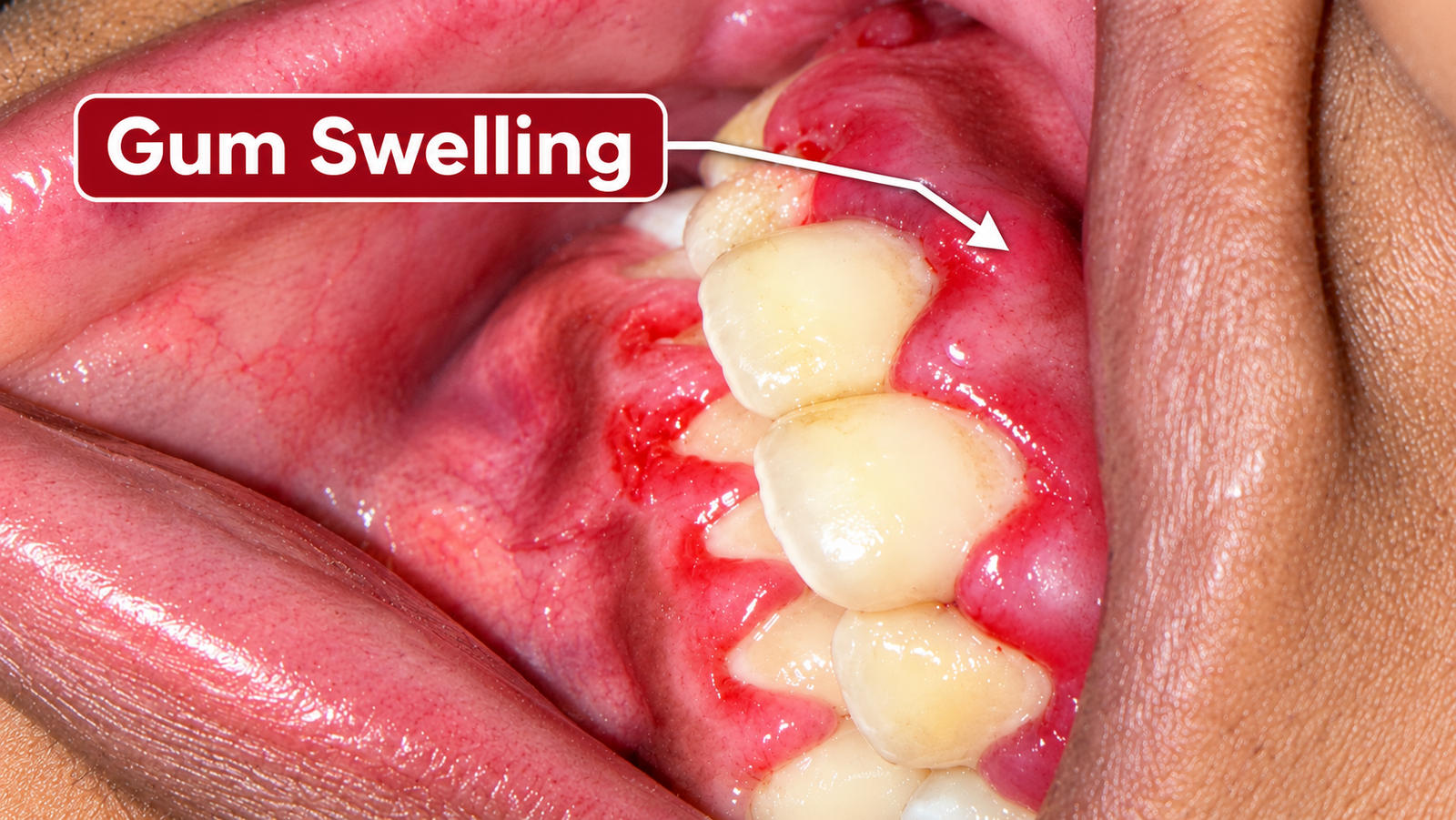
Gum swelling is a sign of inflammation, infection, irritation, or tissue enlargement. With Gum swelling, the visible change tells you something is happening. It does not tell you the cause.
A small swollen area beside one tooth deserves a different assessment from generalized red gums with bleeding. Pain, pus, fever, a loose tooth, a recent filling, an erupting wisdom tooth, braces, dentures, pregnancy, tobacco use, diabetes, or a new medicine all change the clinical picture.
The practical rule is simple: identify the source before choosing treatment.
Why the cause matters more than the appearance
Inflamed gingiva often looks red, puffy, tender, and prone to bleeding. Gingivitis remains confined to gingival tissues, while periodontitis involves deeper periodontal structures and produces attachment loss and bone destruction. The distinction matters because surface cleaning alone does not address established periodontal damage. The oral pathology text describes edema, gingival enlargement, bleeding, and plaque retention as features of gingival inflammation.
A clinician therefore asks four questions:
- Is the problem generalized or limited to one site?
- Is there pain, pus, bleeding, or a bad taste?
- Does the nearby tooth respond normally to clinical testing?
- Is there evidence of periodontal pocketing, bone loss, decay, or another lesion?
These questions narrow the differential diagnosis faster than guessing from a photograph.
The pattern of swelling gives useful clues
Gum swelling around several teeth
Generalized redness and bleeding often point toward plaque-induced gingival inflammation. Brushing and interdental cleaning become central parts of care. Persistent bleeding still deserves a dental examination because periodontal disease requires assessment of pocket depth and attachment status.
Hormonal changes also affect gingival response. During pregnancy, hormonal shifts make the gums more vulnerable to gum disease, so oral hygiene and professional dental care deserve extra attention. nhs.uk
Localized Gum swelling beside one tooth
A single-site lesion raises different possibilities. Trapped food, a periodontal abscess, a foreign body, decay with pulpal infection, trauma, or a partially erupted tooth all create localized inflammation.
A localized gingival abscess is described as an acute painful lesion, often linked with foreign material entering gingival tissue. Pericoronitis is associated with inflammation around an impacted or partly erupted tooth, where debris accumulates beneath the gingival flap.
Gum swelling with pus or a bad taste
Pus changes the level of concern. A dental abscess represents an infection involving a tooth or gum and needs prompt dental treatment. NHS guidance lists tooth or gum pain, redness, bad taste, facial or jaw swelling, fever, and difficulty opening the mouth among possible features.
Do not squeeze the area or wait for spontaneous drainage as a substitute for treatment. Drainage often relieves pressure, but the source of infection still needs attention.
Treating Gum swelling: what treatment looks like in real clinical practice
1. Plaque-related inflammation behind Gum swelling
Early inflammatory disease often improves when plaque control improves. The core measures are:
- Brush twice daily with a fluoride toothpaste
- Clean between teeth daily
- Remove plaque around crowded areas, braces, retainers, and dentures
- Attend professional cleaning when deposits are difficult to remove at home
- Stop tobacco use
NHS guidance recommends oral hygiene measures, interdental cleaning, professional cleaning, and smoking cessation for early gum disease. More advanced disease needs periodontal treatment.
The key point is consistency. A mouthwash does not replace mechanical plaque removal.
2. Periodontitis behind persistent Gum swelling
When inflammation extends into periodontal tissues, treatment moves beyond routine brushing advice. A dentist or periodontist assesses periodontal pockets, attachment loss, tooth mobility, plaque and calculus, occlusion, and radiographic bone levels.
Nonsurgical periodontal therapy often includes professional subgingival instrumentation and individualized home care. Advanced cases require a periodontal treatment plan based on disease severity, anatomy, risk factors, and response to initial therapy.
3. Dental abscess causing Gum swelling
An abscess needs treatment aimed at the infected source. Depending on the diagnosis, this involves drainage, root canal treatment, periodontal treatment, or extraction.
The ADA emphasizes definitive dental treatment for most localized pulpal and periapical conditions rather than routine systemic antibiotics. Fever or malaise changes the clinical picture and supports antibiotic use under professional guidance.
This is one of the most important distinctions for patients: antibiotics do not replace removal of infected tissue or drainage of an abscess.
4. Tooth infection presenting as Gum swelling
Sometimes the gum looks like the problem, while the tooth is the source. Deep decay, a crack, previous trauma, or pulpal necrosis often leads to apical infection and a draining sinus near the gum.
Root canal treatment removes infected or necrotic tissue from inside the tooth, followed by cleaning, shaping, filling, and restoration. NHS root canal treatment guidance
The decision should follow prognosis. A restorable natural tooth with a reasonable periodontal and endodontic outlook deserves careful consideration before extraction.
Home care for Gum swelling: what helps and what does not
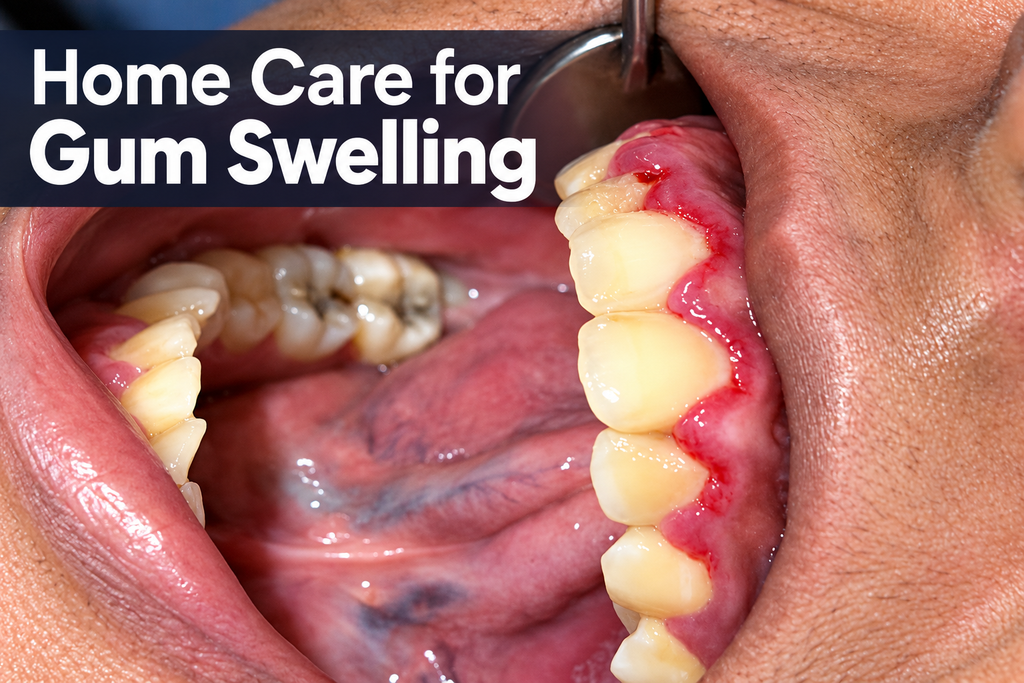
For mild irritation, supportive home care has a role while you arrange assessment.
Useful steps include:
- Gentle brushing with a soft toothbrush
- Daily interdental cleaning
- Rinsing with warm salt water for short-term comfort
- Avoiding tobacco
- Choosing softer foods if chewing hurts
- Staying hydrated
- Avoiding aggressive brushing over the inflamed site
Salt water is a comfort measure, not definitive treatment for infection or periodontal disease.
Do not place aspirin directly on the gum. Do not puncture a swelling. Do not rely on leftover antibiotics. These actions risk tissue injury, delayed diagnosis, or inappropriate treatment.
When should you see a dentist?
Book a dental assessment if Gum swelling persists, returns, bleeds repeatedly, causes pain, or appears beside a specific tooth.
Seek urgent dental care for severe pain, pus, fever, facial swelling, a loose tooth, rapidly increasing swelling, or difficulty opening the mouth. NHS guidance also treats difficulty breathing, speaking, or swallowing, substantial mouth swelling, or eye swelling as emergency warning signs.
Parents should arrange assessment for a child with persistent sore or bleeding gums. Older adults using dentures also need evaluation when tissue changes persist beneath or around an appliance.
What foods help reduce gum inflammation?
No food reverses bacterial plaque or removes calculus. Diet still influences oral health.
Choose foods with useful nutritional value, including vegetables, fruit, dairy or fortified alternatives, nuts when appropriate, and adequate protein. Limit frequent sugary snacks and sweetened drinks because repeated sugar exposure supports dental caries.
For painful gums, temperature and texture matter more than a special “anti-inflammatory” food list. Soft, nutrient-dense foods are often easier to tolerate during an acute episode.
Medication, appliances, and medical conditions
Not every case begins with plaque.
Some medicines are associated with gingival enlargement. Braces and poorly fitting appliances often create plaque-retentive areas or mechanical irritation. Pregnancy alters gingival inflammatory response. Diabetes is associated with oral-health challenges and deserves attention during dental assessment.
The clinical history should therefore include:
- Current medicines and recent medication changes
- Pregnancy status when relevant
- Diabetes and other systemic conditions
- Tobacco and nicotine exposure
- Orthodontic appliances
- Dentures and recent adjustments
- Recent dental treatment
- Changes in toothpaste or mouthwash
- Duration and recurrence of symptoms
A recurring lesion deserves a broader differential diagnosis rather than repeated home treatment.
How dentists investigate a persistent lesion
Clinical examination comes first.
The dentist inspects color, contour, surface, ulceration, discharge, symmetry, and attachment. Periodontal probing assesses pocketing and bleeding. Teeth are tested for decay, cracks, mobility, percussion response, and pulpal status.
Imaging is selected when the clinical findings suggest deeper disease. Intraoral radiographs help assess supporting bone and periapical structures. Three-dimensional imaging has a role in selected cases where anatomy or treatment planning requires greater detail.
The oral pathology literature also distinguishes gingivitis from periodontitis by the presence of underlying bony change.
A persistent mass, unusual color change, ulceration, or unexplained enlargement needs assessment for non-inflammatory disease as well.
A useful clinical decision pathway
Think in sequence:
Gum swelling → location → pain or pus → periodontal findings → tooth findings → medical history → imaging when indicated → diagnosis → treatment.
This sequence prevents a common error: treating the visible gum while missing the diseased tooth, periodontal pocket, trapped foreign material, or systemic contributor.
For patients, the practical lesson is equally important. Take a photograph when the change first appears. Note when it started. Record bleeding, pain, discharge, food trapping, fever, and recent dental work. Bring a medication list to the appointment.
Good history often saves time.
People Also Ask
How should I treat swollen gums?
Start with gentle brushing, daily interdental cleaning, tobacco avoidance, and professional assessment if symptoms persist or recur. Treatment depends on the cause. Plaque-induced inflammation needs plaque control. Periodontal disease needs periodontal therapy. A dental abscess needs treatment of the infection source.
How long does gum swelling usually last?
Duration varies with the cause. Minor irritation often settles after the trigger is removed. Plaque-induced inflammation needs consistent cleaning. Infection often persists until the source receives dental treatment. Recurrent or persistent symptoms deserve examination rather than repeated home remedies.
What is the main reason for swollen gums?
Plaque-related gingival inflammation is common, but it is not the only explanation. Local infection, periodontal abscess, pericoronitis, trauma, medication-related enlargement, hormonal changes, systemic disease, and other oral lesions belong in the differential diagnosis.
What foods help reduce gum inflammation?
There is no food capable of removing plaque or calculus. A balanced diet supports general and oral health. During painful episodes, soft foods with good nutritional value are easier to manage. Reducing frequent sugary snacks and sweet drinks also supports caries prevention.
Does Gum swelling always mean gum disease?
No. A localized lesion beside one tooth deserves a different assessment from generalized gingival inflammation. Dental infection, foreign-body trauma, an erupting wisdom tooth, medication effects, and other conditions also produce gingival enlargement.
What happens when Gum swelling keeps returning?
Repeated episodes deserve a cause-based review.
A cycle of swelling, temporary relief, and recurrence often means the underlying trigger remains. Possible reasons include persistent plaque, an untreated periodontal pocket, a non-vital tooth, food impaction, an appliance problem, smoking, medication-related enlargement, or a medical condition affecting oral health.
The treatment plan should target the driver, not the appearance.
Future of gum-disease assessment
Dental diagnosis is moving toward more integrated data. Digital periodontal charts, intraoral imaging, radiographic analysis, electronic health records, and patient-reported symptoms already create a richer diagnostic dataset.
The next stage will involve decision-support systems able to compare changes across visits, flag unusual patterns, and help clinicians prioritize high-risk sites. AI should support clinical reasoning rather than replace examination, periodontal probing, tooth vitality testing, or professional judgment.
For dental researchers and technology teams, the useful problem is not simply image recognition. The harder problem is multimodal clinical reasoning: linking tissue appearance, probing data, radiographic findings, medical history, treatment history, and longitudinal change into one interpretable model.
This direction matters because early identification of disease is more useful than a polished image classification system with little clinical context.
Internal and external resources
For additional dental information, visit iDentalFix.
For evidence-based patient guidance, see NHS gum disease guidance, NHS dental abscess guidance, and the American Dental Association antibiotic guidance.
Final takeaway
Gum swelling is not a diagnosis. It is a clinical signal.
The right treatment depends on what sits behind the swelling: plaque, periodontal disease, a tooth infection, an abscess, an erupting tooth, trauma, medication, systemic disease, or another lesion.
Start with the cause. Treat the cause. Then monitor the tissue response.
If the swelling is persistent, painful, recurrent, associated with pus, or accompanied by fever or facial swelling, arrange dental care promptly.