
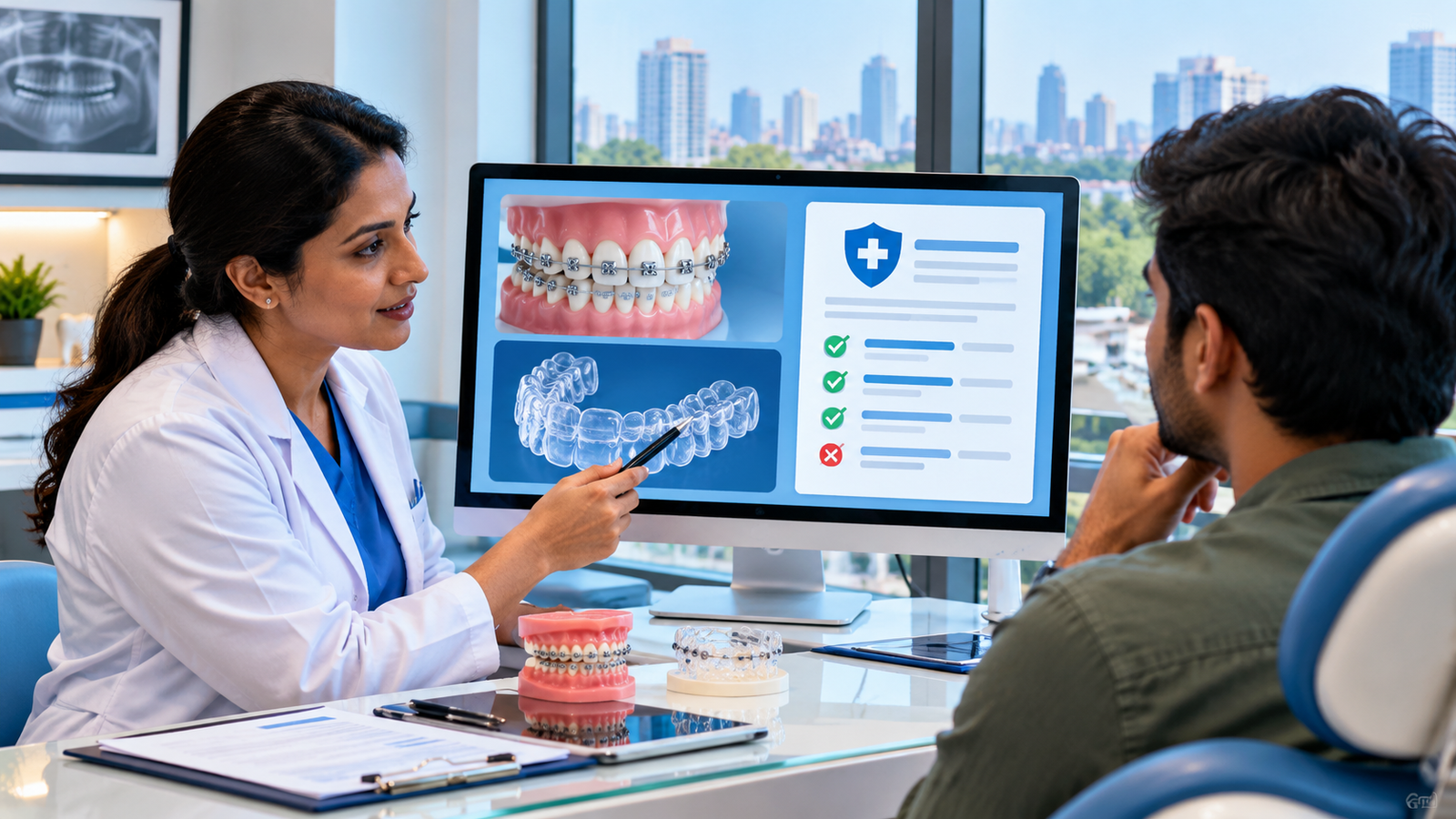
If you are looking for dental insurance that covers orthodontics, the first thing to understand is simple: ordinary health insurance does not automatically pay for braces or clear aligners.
Orthodontic coverage depends on the exact insurance product, benefit schedule, exclusions, waiting periods, treatment purpose, age restrictions, and annual or lifetime limits. Some policies provide dental benefits for specific procedures such as fillings, extractions, or root canal treatment, while orthodontic treatment remains excluded.
This distinction matters because patients often assume that having health insurance means every dental procedure is covered. It does not.
The safest approach is to separate two questions.
First, does your insurance policy provide an orthodontic benefit?
Second, does your particular treatment qualify under that benefit?
Those questions should be answered before you pay a substantial orthodontic treatment fee.
What does dental insurance that covers orthodontics actually mean?
The phrase sounds straightforward, but insurance coverage has several layers.
A policy might provide dental benefits while excluding orthodontics. Another policy might offer orthodontic treatment as an optional benefit with a separate limit. A group insurance plan through an employer might have different terms from an individual health policy.
IRDAI advises policyholders to read the policy wording and understand exclusions, waiting periods, and conditions before relying on health insurance benefits. Dental treatment that does not require hospitalization has historically been treated differently from hospital-based dental treatment, while insurers now offer products and optional benefits with broader outpatient coverage.
For this reason, do not interpret the words “dental coverage” as confirmation that braces are covered.
The policy schedule is what matters.
Does medical insurance cover dental braces in India?
In most standard health insurance policies, routine orthodontic treatment is not automatically covered.
Braces are generally planned treatment. They are used to correct tooth position, crowding, spacing, malocclusion, or other orthodontic problems over a period of months or years.
This differs from emergency dental treatment following an accident or certain medically necessary procedures performed in a hospital setting.
Some insurance products provide specific outpatient dental benefits, but these benefits often focus on procedures such as fillings, extractions, or root canal treatment rather than orthodontic correction.
For example, Tata AIG’s current OPD Care policy wording lists dental consultations, root canal treatment, tooth extraction, and restoration or filling under its dental outpatient benefit, subject to the policy’s limits and waiting period. It does not establish blanket orthodontic coverage for braces.
Therefore, patients should never assume braces are covered simply because their health policy mentions dental treatment.
What does orthodontic insurance usually cover?
When a policy specifically includes orthodontic benefits, the insurer might define coverage around particular treatment categories.
Depending on the policy, coverage might relate to:
• Conventional metal braces
• Ceramic braces
• Other fixed orthodontic appliances
• Certain removable orthodontic appliances
• Clear aligner treatment
• Orthodontic consultations
• Diagnostic records or radiographs
• Retainers, where specifically included
The actual benefit varies considerably.
Some policies pay a percentage of eligible treatment costs. Others impose a fixed benefit. Some use an annual limit. Others apply a lifetime orthodontic maximum.
There might also be a waiting period before you become eligible to claim.
This is why the phrase dental insurance that covers orthodontics should never be treated as a guarantee of full reimbursement.
Does Invisalign have insurance coverage in India?
Invisalign is a clear-aligner system used to move teeth gradually through a sequence of custom-made aligners.
Whether insurance contributes toward Invisalign depends on the policy.
The official Invisalign India website states that treatment costs vary according to case complexity, treatment duration, and the provider. It also advises patients to discuss insurance options with their provider.
The important distinction is between treatment eligibility and insurance eligibility.
Your orthodontist might determine that Invisalign is clinically appropriate. Your insurer might still classify the treatment as excluded orthodontic care.
Conversely, a policy that provides an orthodontic benefit might reimburse only part of the eligible expense.
Do not begin aligner treatment based on an assumption about insurance reimbursement.
Ask for written confirmation first.
Can dental insurance that covers orthodontics pay for adult braces?
Adult orthodontic coverage requires particular attention to policy wording.
Some benefits are designed for children or depend on age at the start of treatment. Other policies might provide orthodontic coverage without the same age restriction.
The clinical reason for treatment also matters.
Insurance companies may distinguish between treatment required to address functional problems and treatment pursued primarily for cosmetic reasons. The exact definition varies by policy.
An adult patient therefore needs to check:
• Age eligibility
• Orthodontic benefit limits
• Waiting period
• Cosmetic-treatment exclusions
• Pre-existing condition rules
• Approved orthodontic procedures
• Network-provider requirements
• Claim documentation
Never rely on an insurance salesperson’s verbal explanation alone. Request the relevant policy wording or benefit schedule.
What about Tata AIG health insurance and dental coverage?
Tata AIG illustrates why patients need to examine the individual product rather than assuming all dental benefits are identical.
Its OPD Care policy wording includes an outpatient dental benefit covering specified services such as dental specialist consultations, root canal treatment, extractions, and restorations or fillings, subject to stated limits and waiting periods.
Tata AIG also describes dental benefits within certain health insurance products, but the exact coverage depends on the product and policy terms.
A separate Tata AIG policy document for MediCare Premier, for example, describes an OPD dental benefit with a specified annual limit after a continuous coverage period and lists root canal treatment, extraction, and filling among the covered services.
This demonstrates an important point.
Dental coverage does not necessarily equal orthodontic coverage.
If you are considering braces, ask Tata AIG or your insurer specifically whether orthodontic treatment is covered under your exact policy number and benefit schedule.
What expenses might not be covered?
Even when a policy provides dental or orthodontic benefits, several expenses might remain your responsibility.
Common limitations include:
• Waiting periods
• Deductibles
• Co-payments
• Annual benefit limits
• Lifetime orthodontic limits
• Network restrictions
• Cosmetic treatment exclusions
• Age restrictions
• Pre-existing condition provisions
• Treatment performed before the policy became effective
• Procedures not specifically listed in the benefit schedule
• Retainers or replacement appliances
• Additional diagnostic or laboratory charges
The policy wording determines which restrictions apply.
IRDAI also advises policyholders to understand what their individual policy excludes rather than relying on assumptions about standard health insurance coverage.
How much does orthodontic insurance pay?
There is no universal reimbursement percentage.
A policy might pay a defined percentage of an eligible treatment fee up to a specified maximum. Another might provide a fixed orthodontic allowance.
For example, suppose your orthodontic treatment costs ₹1,50,000 but your policy provides a ₹30,000 lifetime orthodontic benefit. Your insurance contribution might remain limited to the applicable ₹30,000, subject to all policy conditions.
The opposite situation also matters.
A policy might advertise a percentage benefit, but your actual reimbursement could be reduced by deductibles, exclusions, waiting periods, network rules, or a remaining annual limit.
The headline percentage therefore tells you less than the complete benefit schedule.
How do you check whether your policy covers braces?
Before starting orthodontic treatment, contact your insurer and ask specific questions.
Do not ask only, “Does my insurance cover dental treatment?”
Ask:
“Does my policy cover orthodontic treatment?”
“Are adult braces covered?”
“Are ceramic braces covered?”
“Are clear aligners covered?”
“Is Invisalign covered?”
“What is the maximum orthodontic benefit?”
“Is the limit annual or lifetime?”
“Is there a waiting period?”
“Does the treatment need pre-authorization?”
“Does the orthodontist need to belong to your network?”
“Are diagnostic records covered?”
“Are retainers covered?”
“Are there cosmetic exclusions?”
“Do you require a treatment estimate before approval?”
These questions produce a much clearer answer than a general discussion about dental coverage.
Why pre-authorization matters
For expensive orthodontic treatment, obtaining benefit confirmation before treatment begins is one of the most practical steps you can take.
Your orthodontist can prepare a treatment plan containing the diagnosis, proposed appliance, estimated duration, treatment fee, and other relevant information.
The insurer can then determine whether the proposed treatment qualifies under your policy.
A pre-treatment estimate or pre-authorization does not necessarily guarantee final payment. The final claim remains subject to the policy terms and the information submitted during the claim process.
Still, written confirmation gives you a stronger basis for financial planning.
Should you choose an orthodontist based on insurance coverage?
Insurance should influence your financial decision, but it should not determine your clinical diagnosis.
Your orthodontist evaluates your teeth, jaws, bite, periodontal condition, radiographs, and treatment goals.
The insurer evaluates whether the proposed treatment qualifies for a financial benefit.
These are separate decisions.
An insurer deciding that a procedure is excluded does not mean the treatment is unnecessary. Likewise, an insurer approving a benefit does not mean the treatment is clinically appropriate.
The treatment decision belongs between you and your dental professional.
What should you do if your claim is rejected?
A rejected claim does not always mean the treatment itself is excluded.
First, request the reason for rejection in writing.
Then check:
• The exact exclusion cited
• Waiting-period requirements
• Age restrictions
• Treatment codes
• Documentation submitted
• Pre-authorization requirements
• Network restrictions
• Remaining benefit limits
• Whether the claim was submitted for the correct procedure
If the rejection appears inconsistent with your policy wording, ask the insurer for a review or grievance process.
Keep copies of the treatment plan, invoices, diagnostic records, claim forms, correspondence, and insurer responses.
Good documentation becomes especially important when orthodontic treatment continues for many months.
What does this mean for patients searching for a dentist near me?
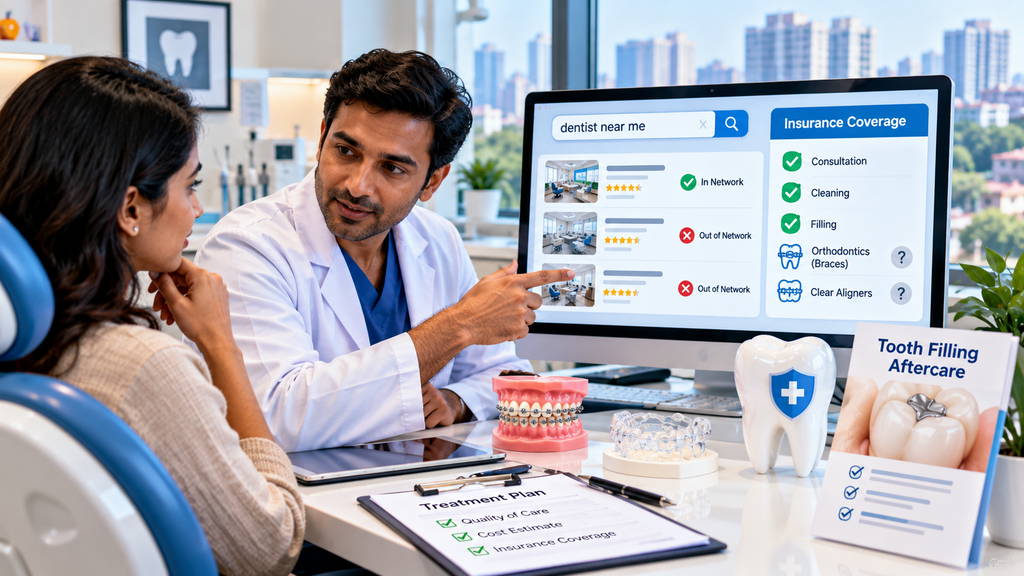
Patients searching for a dentist near me often focus on two things: treatment quality and price.
Insurance adds a third factor.
You need to know whether the provider participates in your insurance network and whether the specific orthodontic service qualifies for benefits.
An in-network provider does not automatically mean the entire treatment will be covered.
Before scheduling treatment, verify both the provider and the procedure.
The same principle applies to restorative treatment. If you recently received a filling, our guide to tooth filling aftercare explains what to expect after treatment and which symptoms deserve a dental review. iDentalFix
What People Also Ask about orthodontic insurance
The People Also Ask questions appearing in search results reveal an important pattern.
Patients are not searching only for “braces insurance.”
They are trying to understand whether their medical insurance covers braces, what orthodontic insurance includes, whether Invisalign qualifies, and whether a particular insurer provides dental benefits.
These questions show strong commercial investigation intent.
Someone asking whether Tata AIG provides dental coverage might already be comparing insurance products. Someone asking about Invisalign coverage might already be considering treatment. Someone searching for braces insurance might be estimating their out-of-pocket cost.
A useful dental article therefore needs to answer both the clinical and financial sides of the decision.
Insurance information without orthodontic context is incomplete. Orthodontic information without financial context also leaves an important patient question unanswered.
What is the difference between dental insurance and medical insurance?
Medical insurance primarily focuses on healthcare expenses defined within the health policy.
Dental insurance or dental benefits focus specifically on oral healthcare services.
In India, some health insurance products include limited dental benefits, while others exclude routine dental treatment unless specific conditions apply.
IRDAI’s consumer guidance states that policyholders should examine the policy document for exclusions and conditions.
This distinction is important when comparing policies.
A policy with a higher overall sum insured is not automatically better for orthodontic treatment.
A policy with a lower premium but a specific orthodontic benefit might be more useful to a patient planning braces.
Compare the benefit you need, not only the size of the headline health cover.
Is orthodontic treatment worth paying for without insurance?
For a patient who needs orthodontic correction, the decision should begin with the clinical problem rather than insurance availability.
Orthodontic treatment might improve tooth alignment, bite relationships, oral function, or the ability to maintain oral hygiene in certain cases.
Your orthodontist should explain the diagnosis, treatment alternatives, expected duration, risks, retention requirements, and total cost.
If insurance does not contribute, ask the clinic about the complete treatment fee and available payment arrangements.
Do not postpone clinically necessary care indefinitely because you expect insurance to cover it.
What could change in dental insurance in the future?
Dental coverage in India is becoming more varied as insurers introduce outpatient benefits and more consumers compare healthcare products based on everyday treatment needs.
Tata AIG, for example, currently offers products and riders with specified outpatient dental benefits rather than relying solely on traditional hospitalization-based coverage.
For patients, the important future trend is greater attention to benefit design.
A useful policy comparison will increasingly require patients to examine:
• Outpatient dental benefits
• Orthodontic exclusions
• Treatment limits
• Waiting periods
• Network restrictions
• Pre-authorization rules
• Claim documentation
Digital benefit verification also makes it easier for patients and dental practices to check coverage before expensive treatment begins.
The practical lesson is simple: read the benefit schedule before choosing the policy, not after receiving the orthodontic bill.
How to reduce unexpected orthodontic expenses
You do not need to predict every expense.
You need to identify the financial variables before treatment starts.
Ask your orthodontist for a written treatment estimate.
Then ask your insurer for written benefit confirmation.
Compare the two documents.
Make sure you understand whether the quoted orthodontic fee includes:
• Initial consultation
• Diagnostic records
• X-rays or scans
• Braces or aligners
• Scheduled adjustments
• Replacement brackets or aligners
• Retainers
• Retention appointments
• Emergency visits
• Treatment refinements
• Additional appliances
This approach gives you a realistic picture of the total financial commitment.
Final takeaway
The phrase dental insurance that covers orthodontics should never be interpreted as a promise that braces will be fully paid for.
Coverage depends on the specific policy, treatment type, patient eligibility, exclusions, waiting periods, benefit limits, and insurer requirements.
Some Indian health insurance products provide dental outpatient benefits, but those benefits do not automatically extend to orthodontic treatment. Tata AIG’s current OPD dental wording, for example, specifies benefits for selected dental services such as consultations, root canal treatment, extractions, and fillings, subject to policy conditions.
If you are considering braces or Invisalign, verify the orthodontic benefit in writing before treatment begins.
Your dentist determines what treatment your teeth need.
Your insurer determines what portion of that treatment qualifies for reimbursement.
Understanding both sides before starting treatment is the best way to avoid an unexpected dental bill.
FAQ’s
Does medical insurance cover dental braces?
Most standard health insurance policies do not automatically cover routine orthodontic treatment. Coverage depends on the individual policy and whether it specifically includes orthodontic benefits.
What does orthodontic insurance cover?
A policy with orthodontic benefits might cover part of eligible braces or aligner treatment, subject to limits, waiting periods, exclusions, age requirements, and other policy conditions.
Is Invisalign covered by insurance in India?
Invisalign coverage depends on the insurance plan. Invisalign India advises patients to check their insurance options with their provider.
Does Tata AIG health insurance offer dental coverage?
Some Tata AIG products and riders provide specified dental benefits. The current OPD Care wording includes dental consultation, root canal treatment, extraction, and restoration or filling, subject to policy limits and waiting periods. This does not mean every Tata AIG policy covers every dental procedure.
Are adult braces covered by insurance?
Adult orthodontic coverage depends on the policy. Some plans impose age restrictions or exclude orthodontic treatment. Check the benefit schedule before beginning treatment.
Does insurance pay for ceramic braces?
Only if the policy includes the relevant orthodontic treatment and the appliance qualifies under its terms. Some policies might treat different orthodontic appliances differently.
Does insurance cover retainers after braces?
Not necessarily. Retainers might be included, excluded, or subject to a separate limit. Ask the insurer before treatment begins.
Can I claim orthodontic treatment without pre-authorization?
This depends on the policy. Some insurers require pre-authorization or prior approval for specific treatments. Starting treatment before completing the required process might affect reimbursement.