
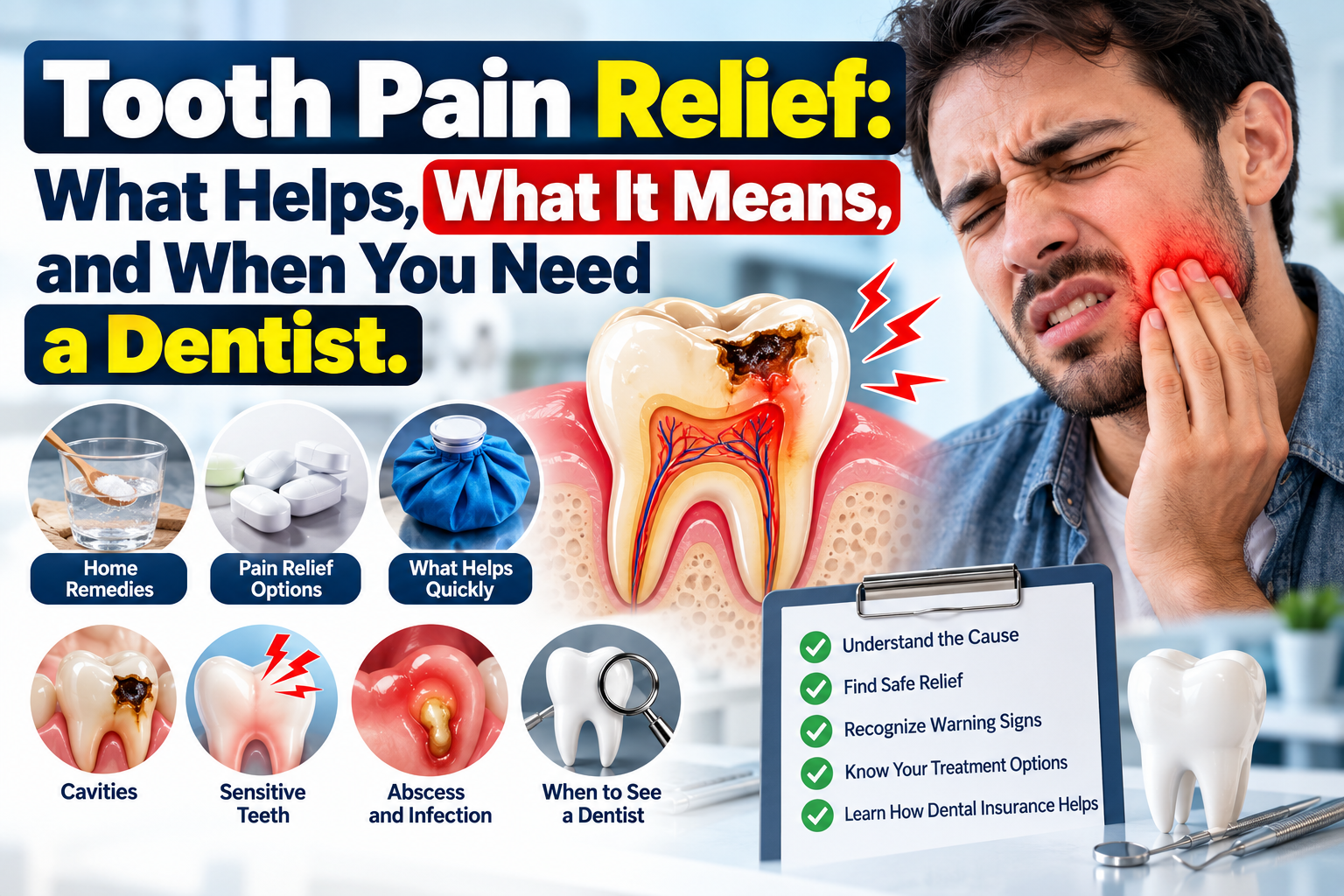
Tooth pain often arrives at the worst possible time. It starts as brief sensitivity, becomes a dull ache, or turns into throbbing pain that keeps you awake. The important question is not only what reduces discomfort, but why the tooth hurts.
A cavity, cracked tooth, exposed dentin, inflamed pulp, gum infection, or dental abscess may produce similar symptoms while needing different treatment. Temporary measures help you through the next few hours. They do not repair damaged tooth structure or remove an infection.
What relieves tooth pain quickly at home?
When people ask what relieves tooth pain, they usually want something safe for the next few hours. Gently rinse with warm salt water to help clear debris and soothe irritated tissues. A cold compress against the outside of the cheek may reduce swelling and discomfort.
For acute dental pain, non-opioid medicines such as ibuprofen or acetaminophen are commonly used when appropriate. The American Dental Association recommends nonsteroidal anti-inflammatory drugs, alone or combined with acetaminophen, as first-line options for many adults and adolescents with acute dental pain when definitive dental treatment is not immediately available.
Medication safety depends on your medical history, allergies, pregnancy status, kidney function, stomach health, and other medicines you take. Follow the product label and seek advice from a pharmacist or clinician if you are unsure.
What relieves tooth pain from a cavity?
If you are wondering what relieves tooth pain caused by a cavity, start by reducing triggers. Cold drinks, sweets, acidic foods, and very hot foods often provoke pain when decay exposes dentin.
There is an important distinction between early enamel decay and an established cavity. A non-cavitated early lesion might respond to fluoride and improved control of plaque and dietary risk factors. Once a cavity has formed and tooth structure has been lost, restorative treatment is often needed.
If decay reaches the pulp, treatment might involve root canal therapy or extraction, depending on the tooth and its condition.
For additional patient guidance, see Colgate’s tooth pain relief guide.
What does different tooth pain mean?
The character and timing of pain provide useful clinical clues.
Brief pain from cold or sweet foods often occurs when dentin becomes exposed through gum recession, enamel loss, tooth wear, or decay.
Pain that continues after the trigger disappears deserves greater attention because the pulp inside the tooth might be inflamed.
Pain when biting may occur with a cracked tooth, a defective restoration, inflammation around the root, or dental trauma.
Spontaneous throbbing pain, particularly when it begins without an obvious trigger, needs dental assessment.
Pain accompanied by swelling, fever, a bad taste, pus, or drainage raises concern for infection.
These patterns do not establish a diagnosis on their own. A dentist may use clinical examination, pulp testing, bite testing, periodontal assessment, and dental radiographs to identify the source.
Why Does My Tooth Hurt When I Bite Down?
Pain on biting deserves attention because several different problems produce it.
A cracked tooth might hurt when pressure is applied or released. A tooth with inflammation around its root might become tender when you bite. A defective filling or crown might also alter the bite and create localized discomfort.
Do not repeatedly test the tooth with hard foods. Continued pressure on a cracked or inflamed tooth may worsen the problem.
A dental examination helps determine whether the pain originates from the tooth itself, the surrounding tissues, or the way the teeth meet.
What relieves tooth pain at night?

Night-time toothache deserves attention because severe dental inflammation often becomes more noticeable when you are trying to sleep.
If you are asking what relieves tooth pain at night, keep your head slightly elevated, avoid foods and drinks that trigger the tooth, and use an appropriate over-the-counter pain reliever according to its label.
A cold compress against the cheek may provide temporary comfort when swelling is present. Do not place aspirin directly on the gum or tooth because it may damage oral tissue.
If toothache repeatedly wakes you from sleep, do not continue extending home treatment. Arrange a dental examination.
What relieves tooth pain from an abscess?
If you are asking what relieves tooth pain from an abscess, the priority is treating the infection rather than simply suppressing the pain.
A dental abscess does not reliably disappear on its own. Depending on the tooth and diagnosis, treatment might involve drainage, root canal therapy, or extraction.
Antibiotics do not replace treatment of the infected tooth. They are generally considered when systemic involvement or spreading infection is present.
Facial swelling, fever, worsening pain, pus, swollen glands, or difficulty opening the mouth require prompt dental assessment.
If swelling makes breathing or swallowing difficult, seek emergency medical care immediately.
When should I see a dentist for tooth pain?
Searches for dentist near me often begin after home measures stop working. Arrange a dental appointment if toothache lasts more than two days, keeps returning, or interferes with eating or sleeping.
Pain when biting, swollen gums, fever, a bad taste, facial swelling, or persistent sensitivity also deserves assessment.
Do not wait for severe pain before seeking care. A tooth that hurts intermittently might still have active decay, structural damage, or pulp inflammation.
Emergency medical care is required if oral or facial swelling affects breathing, swallowing, or speaking, or spreads toward the eye or neck.
What relieves tooth pain without medicine?
For people asking what relieves tooth pain without medicine, the useful options are simple and temporary.
Warm salt-water rinsing may help clean the area. Soft foods reduce pressure on a painful tooth. Avoid extreme temperatures, sweets, acidic foods, and hard foods when they trigger symptoms.
Continue gentle brushing and cleaning around the painful area rather than abandoning oral hygiene.
Clove oil is often discussed because eugenol has local analgesic properties. Concentrated clove oil may irritate oral tissues, so it should not be treated as a cure or applied aggressively to the gums.
Can sensitive teeth cause sudden pain?
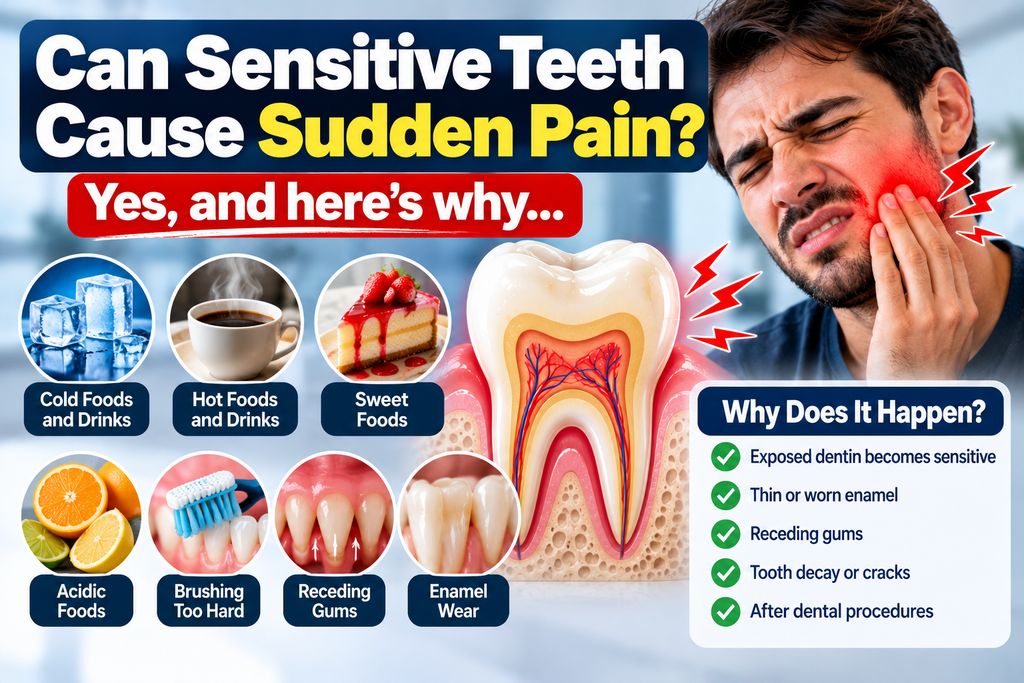
Yes. Tooth sensitivity often produces a sharp, short-lived response to cold, hot, sweet, or acidic foods and drinks.
Common contributors include exposed dentin, gum recession, enamel wear, aggressive brushing, tooth whitening, decay, and cracks.
If the pain lingers after the trigger disappears, occurs without a trigger, or becomes increasingly intense, simple sensitivity is less likely to explain the entire problem.
If you are looking for what relieves tooth pain caused by sensitivity, a dentist might recommend desensitizing toothpaste, fluoride treatment, restoration of exposed areas, or treatment of the underlying cause.
Does tooth pain always mean a root canal?
No. Tooth pain does not automatically mean root canal treatment.
A dentist first determines whether the pulp is healthy, irritated, or infected. Mild sensitivity might need preventive treatment. A cavity might need a filling. A crack might require bonding, a crown, or another restoration. Irreversible pulp inflammation or infection might require root canal treatment or extraction.
The objective is to treat the underlying disease while preserving the natural tooth when a predictable restoration is possible.
How does dental insurance help with tooth pain?
Dental insurance often treats preventive, restorative, and emergency services differently. Plans vary in deductibles, annual limits, waiting periods, exclusions, coinsurance, and provider networks.
If you are searching what relieves tooth pain because treatment costs are a concern, ask the dental office for a written estimate and check your plan before non-emergency treatment.
Do not postpone urgent dental care because you are uncertain about coverage. Financial questions are important, but an untreated dental infection requires appropriate clinical attention.
For related patient-education coverage, visit iDentalFix
What relieves tooth pain while waiting for a dentist?
If you need what relieves tooth pain while waiting for an appointment, protect the tooth and control the triggers.
Choose soft foods and chew on the opposite side. Keep the area clean. Use an appropriate pain reliever if it is safe for you. A cold compress may help with swelling.
Do not place crushed tablets, alcohol, bleach, essential oils, or other household substances directly on the tooth or gum. These substances may damage oral tissues without treating the underlying problem.
What should you do if tooth pain keeps coming back?
Recurring tooth pain is a reason to investigate the cause rather than repeatedly treating the symptom.
If cold drinks trigger pain that disappears quickly, sensitivity or exposed dentin might be involved. If pain lingers, starts spontaneously, or becomes severe at night, the pulp deserves assessment.
If biting causes pain, the dentist should consider cracks, restoration problems, or inflammation around the root. If swelling appears, infection needs to be considered.
If you are still searching what relieves tooth pain after several episodes, the next useful step is a dental examination.
What is the safest way to manage a toothache?
The safest strategy has two parts: temporary symptom control and definitive diagnosis.
Use appropriate home measures for short-term comfort. Avoid putting chemicals or medication directly on the tooth. Arrange dental care when pain persists, returns, affects sleep, or comes with swelling or fever.
If you are searching what relieves tooth pain, remember that the answer depends on the cause. Sensitivity, decay, cracks, pulp inflammation, and dental infection require different treatment.
The safest way to manage a toothache is to control the discomfort temporarily while arranging a dental examination to identify the cause.
- Use an appropriate over-the-counter pain reliever according to the label and your medical history.
- Rinse gently with warm salt water to keep the area clean.
- Apply a cold compress to the outside of the cheek if swelling is present.
- Eat soft foods and chew on the opposite side.
- Avoid very hot, cold, sweet, or acidic foods if they trigger pain.
- Continue gentle brushing and flossing around the affected area.
- Do not place aspirin, crushed tablets, alcohol, bleach, or concentrated essential oils directly on the tooth or gums.
A toothache that disappears is not always a toothache that is cured. Pain relief matters, but finding the reason for the pain matters more.
2 thoughts on “Understanding Your Tooth Pain: Fast Relief Tips and When to Call the Dentist”